
Ovarian hyperstimulation syndrome, or OHSS, is the best-known complication of fertility stimulation. In most people it is mild: the ovaries swell, the belly feels bloated, and symptoms fade within a week or two. In a small number it becomes serious, with fluid shifting into the abdomen and chest, strain on the kidneys and a higher risk of blood clots. Knowing which symptoms are expected and which need urgent care is one of the most useful things an egg donor or IVF patient can learn before the trigger shot.
This guide covers who is at risk, when OHSS appears, how mild, moderate and severe cases differ, when to call the clinic and when to go to the emergency room, how ultrasound helps, and the prevention strategies IVF clinics now use. It is general information; your IVF clinic’s instructions always come first.
If you have these symptoms, go to the ER or call 911
We are putting this first because it matters most. If you have recently had fertility stimulation, a trigger shot or an egg retrieval and you notice any of the following, go to the nearest emergency room or call 911. Do not wait for a scheduled monitoring visit.
- Trouble breathing or shortness of breath, especially when lying flat, or chest pain
- Severe abdominal pain, or sudden sharp pain on one side of the pelvis (a stimulated ovary can twist, called torsion)
- Very little or no urine over many hours, or very dark urine with dizziness
- Fainting, a racing heartbeat, or feeling so lightheaded you cannot stand
- A painful, swollen or red leg, or swelling in one arm or the neck (possible blood clot)
- Sudden severe headache, vision changes, weakness, numbness or trouble speaking (possible clot affecting the brain)
- Rapid weight gain of more than about 10 pounds over 3 to 5 days, or a belly that becomes tight and very swollen
- Vomiting so severe you cannot keep any fluids down
Call 911 rather than driving yourself if you have trouble breathing, chest pain, stroke-like symptoms or have fainted. Tell the emergency team that you are in a fertility cycle, the date of your trigger shot and retrieval, the type of trigger if you know it (hCG or a GnRH agonist), and whether you could be pregnant. Bring your IVF clinic’s phone number.
What OHSS is and why it happens
Fertility medications stimulate many follicles at once. After the trigger shot, and especially when hCG is used, those follicles release chemical signals, including vascular endothelial growth factor (VEGF), that make small blood vessels leaky. Fluid moves out of the bloodstream into the abdomen (ascites) and sometimes around the lungs. The blood left behind becomes more concentrated, which raises the risk of clots and reduces blood flow to the kidneys. The enlarged ovaries themselves cause pain and pressure, and can twist.
Moderate-to-severe OHSS has historically been reported in about 1 to 5 percent of IVF cycles, according to the 2024 ASRM guideline, and severe cases occur in fewer than 1 percent of people having stimulation, according to Cleveland Clinic. Rates have fallen as clinics have changed protocols. ASRM’s committee opinion on repetitive egg donation reports severe OHSS in about 1 to 2 percent of retrieval cycles overall and notes the rate may be lower in donors, partly because no pregnancy follows the cycle.
Who is at higher risk
The 2024 ASRM guideline groups risk factors into those known before treatment and those that appear during stimulation. Having one does not mean you will develop OHSS; it means your clinic will watch more closely and choose protocols designed to lower the risk.
| Risk factor | Why it matters |
|---|---|
| Polycystic ovary syndrome (PCOS) | Many small follicles respond strongly to stimulation |
| Previous OHSS | Past response is a strong predictor |
| High antral follicle count (more than about 24) | More follicles available to grow at once |
| High AMH (above about 3.4 ng/mL) | A marker of a large follicle pool |
| Younger age | Younger ovaries tend to respond more strongly |
| More than about 17 follicles over 10 mm at trigger | A large cohort releases more of the signals that cause leaky vessels |
| Estradiol above about 3,500 pg/mL at trigger | Reflects a very strong response |
| More than about 15 eggs retrieved | Linked to higher rates of moderate and severe OHSS |
| hCG trigger, fresh embryo transfer or pregnancy | hCG drives OHSS; pregnancy keeps producing it |
Early versus late OHSS
Timing tells you a lot about the cause and the likely course.
- Early OHSS usually begins about 4 to 7 days after the trigger shot, often in the days after retrieval. It is driven by the trigger and the response to stimulation, and it usually resolves with the next period.
- Late OHSS begins about 9 or more days after the trigger and is usually linked to a pregnancy, because the pregnancy itself produces hCG. It tends to be more severe and last longer.
For egg donors, late OHSS is uncommon because there is no embryo transfer. The important exception is an unplanned pregnancy: donors are highly fertile during and just after stimulation, and a pregnancy can trigger late OHSS. Follow your clinic’s advice on abstaining from intercourse or using protection until your next period.
Mild, moderate, severe and critical: how cases are classified
Clinics use classification systems from ASRM and the Royal College of Obstetricians and Gynaecologists (RCOG). Labels differ slightly between systems; the table combines the main features.
| Severity | Typical symptoms | Typical findings |
|---|---|---|
| Mild | Bloating, mild abdominal pain, mild nausea, sometimes diarrhea | Enlarged ovaries, often under about 8 cm |
| Moderate | Moderate pain, nausea with or without vomiting, increasing belly size | Fluid in the abdomen visible on ultrasound; ovaries often about 8 to 12 cm; early changes in blood counts |
| Severe | Visible abdominal swelling, shortness of breath, low urine output, vomiting that will not stop | Fluid that can be felt on exam, sometimes fluid around the lungs; concentrated blood and abnormal kidney or salt levels; ovaries often over 12 cm |
| Critical | Tense, painful abdomen, very low or no urine, severe breathing difficulty | Kidney failure, blood clots, fluid around the heart or lungs, breathing failure; needs hospital and often intensive care |
Mild OHSS: what home care usually looks like
Many people with mild OHSS are managed at home with close contact with the clinic. Typical instructions from clinics and patient resources such as MedlinePlus and Cleveland Clinic include:
- Drink plenty of fluids, including electrolyte drinks, unless your clinic tells you otherwise. MedlinePlus suggests about 10 to 12 glasses a day.
- Weigh yourself every morning before eating or drinking, and write it down.
- Track how often you urinate and the color of your urine.
- Use acetaminophen for discomfort if your clinic approves it. Ask before taking anti-inflammatory pain relievers such as ibuprofen.
- Avoid strenuous exercise, high-impact activity and intercourse while the ovaries are enlarged, because they raise the risk of torsion or a cyst rupturing.
- Limit alcohol and caffeinated drinks.
- Rest, but move around gently through the day rather than staying in bed, which helps lower clot risk.
When to call your IVF clinic promptly
These symptoms are not always an emergency, but they need a call to the clinic promptly, not at your next appointment. Use the after-hours line if it is evening or a weekend.
- Weight gain of more than about 2 pounds (1 kg) in a day
- Urinating less than about a cup in 8 hours, or urine turning dark
- Bloating or belly size that keeps increasing
- Nausea or vomiting that makes it hard to keep fluids or food down
- Abdominal pain that is getting worse rather than better
- Feeling dizzy or more short of breath than usual
If any of these become severe, or if you develop the symptoms listed at the top of this article, go to the ER or call 911.
How ultrasound helps
Ultrasound is central to OHSS at every stage, from predicting it to tracking recovery.
During stimulation
Each monitoring scan counts and measures the growing follicles. Combined with estradiol levels, that count is how clinics spot a strong response early. A donor or patient with many follicles and rising estradiol may have her dose lowered, her trigger changed or her plan switched to freezing all embryos before symptoms ever start. Our guide on how many monitoring scans an egg donor needs explains what each scan measures.
After the trigger and retrieval
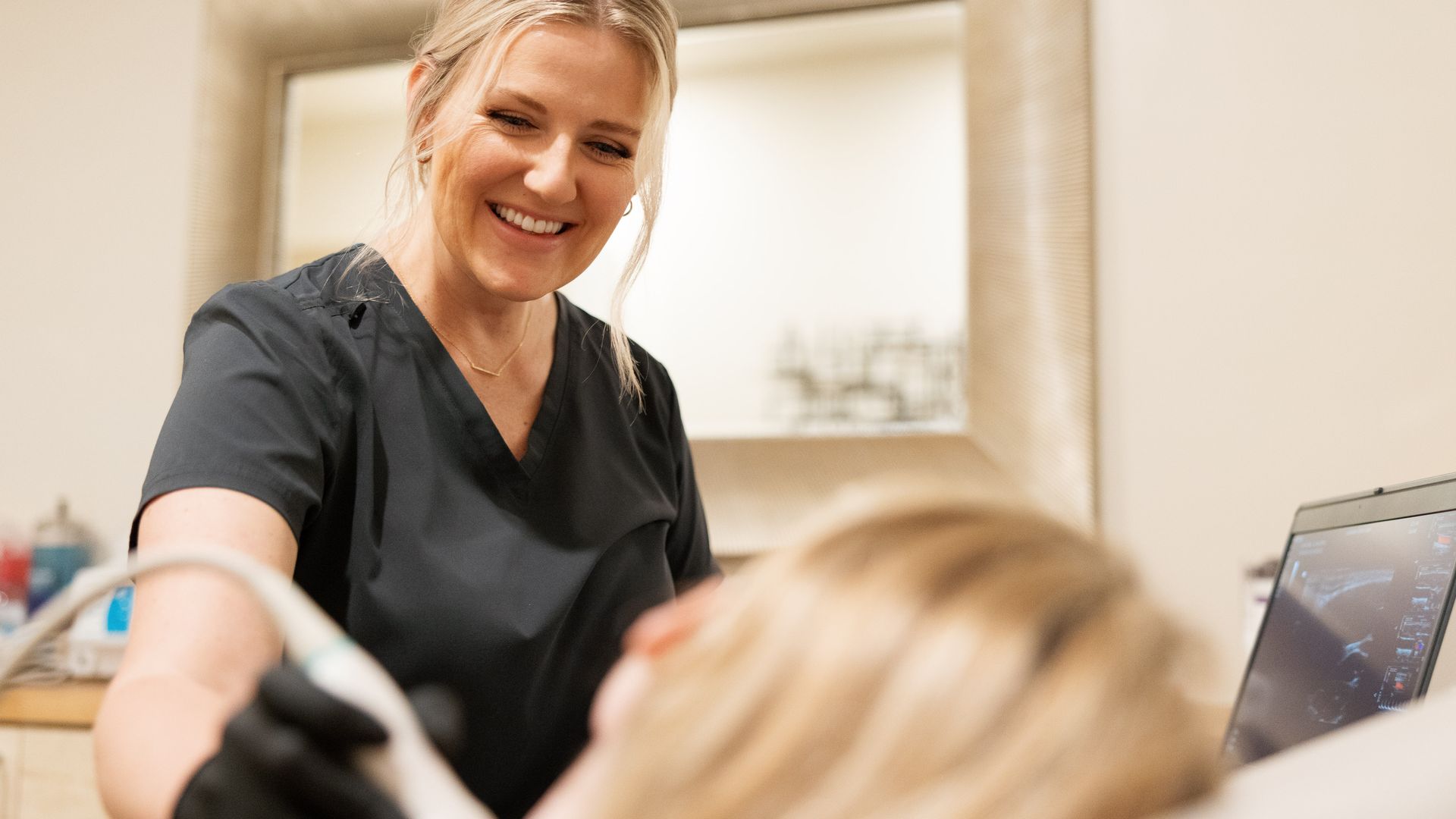
If symptoms develop, a pelvic and abdominal ultrasound shows how large the ovaries are and how much free fluid has collected in the pelvis and upper abdomen. Fluid around the lungs can sometimes be seen too. Repeat scans show whether things are improving. In more serious cases, ultrasound guides paracentesis, a procedure in a hospital or clinic setting that drains fluid from the abdomen to relieve pressure and breathing difficulty. Ultrasound is always combined with bloodwork, such as hematocrit, electrolytes and kidney function, and with the clinician’s exam.
Where a scan with us fits
For a stable patient whose IVF clinic wants a follow-up pelvic ultrasound, we can perform the scan at our clinic or bring the scan to you in our California service areas. A board-certified radiologist reads every study, and the report is ready within 24 hours. That timeline suits planned follow-up. It is not the right path for anyone with severe symptoms, who needs an emergency department where scans, labs and treatment happen together.
How IVF clinics prevent OHSS
Prevention has improved dramatically. The 2024 ASRM guideline gives its strongest recommendations to several strategies, and clinics usually combine them for higher-risk patients.
| Strategy | What it means | ASRM 2024 position |
|---|---|---|
| Antagonist protocol | Uses a GnRH antagonist to prevent early ovulation, which allows an agonist trigger | Recommended over agonist protocols when OHSS is a concern |
| Individualized dosing | Choosing the gonadotropin dose from AMH, antral follicle count and history; a lower starting dose for strong responders | Recommended |
| GnRH agonist trigger | Triggers final egg maturation without the long-acting effect of hCG | First-line for preventing OHSS |
| Freeze-all | Freezing all embryos and transferring later, so no pregnancy hCG adds to the risk | Recommended for high responders or very high estradiol |
| Cabergoline | A dopamine agonist started around the trigger that reduces vessel leakiness | Recommended for at-risk patients |
| Coasting | Pausing stimulation medication for a few days before trigger | Not a primary strategy; reserve for when better options are unavailable |
| Metformin | Diabetes medication sometimes used in PCOS | Not recommended for prevention alone in antagonist cycles; may be considered in PCOS with agonist protocols |
Egg donors benefit from these strategies in particular. Because a donor’s eggs are fertilized and the embryos either frozen or transferred to a recipient, a GnRH agonist trigger and no fresh transfer in the donor are routine choices. That combination is one reason severe OHSS appears to be less common in donors than in IVF patients overall.
How OHSS is treated
Treatment depends on severity. Mild cases are managed at home with fluids, rest, daily weights and close contact with the clinic. Moderate cases need more frequent checks, often with bloodwork and ultrasound. Severe cases usually need hospital care, which can include intravenous fluids, careful tracking of fluid in and urine out, drainage of abdominal fluid, medications to relieve symptoms and blood thinners to lower clot risk. Even severe OHSS is temporary. Cleveland Clinic notes it typically resolves within about two weeks with prompt treatment, though a pregnancy can make it last longer.
Questions to ask your clinic before the trigger shot
- Am I at higher risk of OHSS, and what is the plan to lower it?
- Which trigger am I having, and does that change my risk?
- What weight gain or urine change should make me call?
- What is the after-hours number, and who answers it?
- Which pain relievers are safe for me to take?
- When can I go back to exercise and intercourse?
- Will I have a follow-up scan after retrieval?
Getting a follow-up scan with us
We perform transvaginal follicle monitoring and pelvic ultrasound at our clinic, or we bring the scan to you in our California service areas. A board-certified radiologist reads every study, and the report is ready within 24 hours, sent to you and to the clinic named on your referral. We charge a flat rate paid when you book, with no facility fee, and HSA/FSA cards are accepted. IVF clinics and agencies can send a referral through our provider resources page; patients can book online or call (916) 751-1944. For the full donor timeline, see our egg donor monitoring guide, and for one-sided pain that could be torsion or a ruptured cyst, see ovarian torsion vs cyst rupture.
Getting a scan with us: our pelvic and women’s health ultrasound page explains what the scan covers and how to prepare. You can book online for our clinic, or we bring the scan to you at home. A board-certified radiologist reads every study, and the report is ready within 24 hours. Your own doctor interprets the results for you.
Sources
- ASRM Practice Committee. Prevention of moderate and severe ovarian hyperstimulation syndrome: a guideline. Fertil Steril. 2024
- ASRM Practice Committee. Repetitive oocyte donation: a committee opinion (2020)
- Cleveland Clinic. Ovarian hyperstimulation syndrome (OHSS)
- MedlinePlus. Ovarian hyperstimulation syndrome
- RCEMLearning. Ovarian hyperstimulation syndrome (summarizing RCOG classification)
- UW Medicine. Ovarian hyperstimulation syndrome patient handout (2025)
Frequently asked questions
How soon after egg retrieval can OHSS start?
Early OHSS usually begins about 4 to 7 days after the trigger shot, often in the days after retrieval, and usually improves with the next period. Late OHSS starts about 9 or more days after the trigger and is usually linked to pregnancy.
What are the first signs of OHSS?
Bloating, mild abdominal pain, nausea and a noticeable increase in belly size are common early signs. Call your IVF clinic for weight gain of more than about 2 pounds in a day, reduced or dark urine, or symptoms that keep getting worse.
When should I go to the ER for OHSS?
Go to the ER or call 911 for trouble breathing, chest pain, severe or sudden one-sided abdominal pain, very little urine, fainting, a painful swollen leg, stroke-like symptoms, or vomiting so severe you cannot keep fluids down.
Can egg donors get OHSS?
Yes, although severe OHSS appears to be less common in donors, partly because no pregnancy follows the cycle and clinics routinely use a GnRH agonist trigger. Donors should avoid an unplanned pregnancy, which can cause late OHSS.
How does ultrasound help with OHSS?
During stimulation, follicle counts help clinics spot a strong response early and change the plan. After retrieval, ultrasound shows ovarian size and free fluid in the abdomen, tracks recovery and guides fluid drainage in serious cases.
How do clinics prevent OHSS?
Common strategies include antagonist protocols, individualized lower doses, a GnRH agonist trigger instead of hCG, freezing all embryos instead of a fresh transfer, and cabergoline for at-risk patients, as recommended in the 2024 ASRM guideline.
This article is general health information, not medical advice. It does not replace a conversation with your own physician, who knows your history and can interpret results in context. If you have symptoms that worry you, contact your doctor; if you think you are having a medical emergency, call 911.