
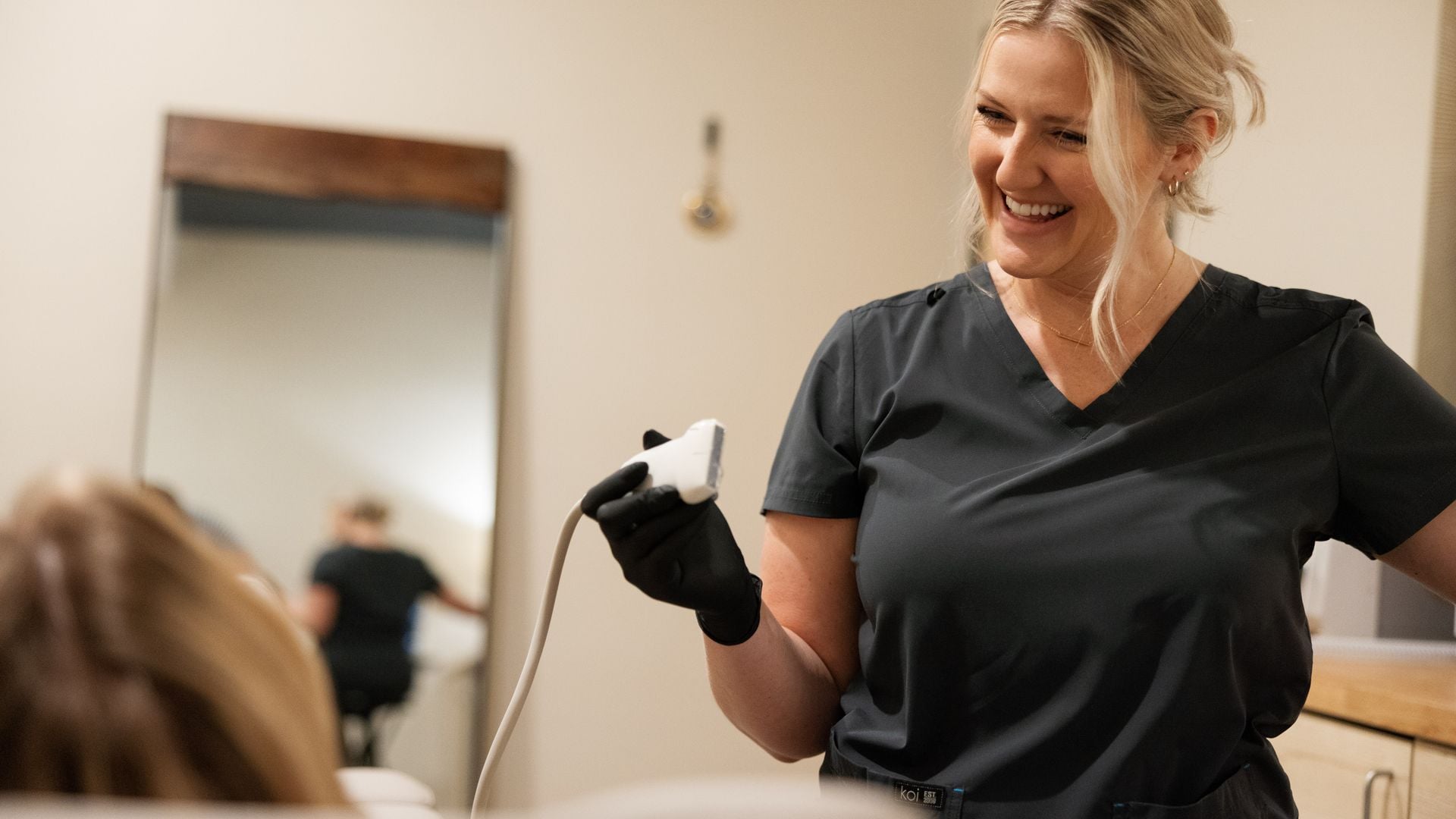
For many gestational carriers, especially first-timers, the transvaginal ultrasound is the part of the medical process they feel most uncertain about. Lining checks and early pregnancy scans are almost always done this way, so a carrier may have several during a journey. Knowing exactly what happens, why it is needed, and what you can ask for makes a real difference.
Why the scans are transvaginal
In early pregnancy and during a medicated cycle, the uterus and its lining sit low in the pelvis. A slim probe placed a short way into the vagina sits right next to them, giving a far clearer picture than scanning through the belly. That clarity is what lets the fertility clinic measure the lining to a fraction of a millimeter and see an early heartbeat days sooner.
What happens, step by step
- You empty your bladder (a full bladder pushes the uterus out of view for this type of scan).
- In private, you undress from the waist down and cover yourself with a sheet.
- You lie on your back with knees bent, sometimes with a cushion under your hips.
- The sonographer covers the probe with a protective cover and gel. You can insert it yourself if you prefer.
- The probe is gently angled to view the uterus, lining and ovaries. You may feel pressure, but it should not hurt.
- The scan usually takes 10 to 20 minutes.
Your comfort options
- Insert the probe yourself, guided by the sonographer.
- Bring a support person if you wish.
- Ask the sonographer to explain each step before it happens.
- Say stop at any time. The scan pauses whenever you ask.
- Wear a two-piece outfit so you only change from the waist down.
If you have had difficult experiences with pelvic exams, let the team know in advance. Going slowly, explaining everything and letting you lead often helps.
Is it safe in pregnancy and on progesterone?
Yes. Transvaginal ultrasound uses sound waves, not radiation, and is the standard way to scan early pregnancies. It does not cause miscarriage. Light spotting afterward can happen, especially with vaginal progesterone, which makes the cervix more delicate; mention any spotting to your clinic.
How many will you have?
Typically a baseline scan and one to three lining checks in the prep cycle, then an early pregnancy scan around 6 to 7 weeks and one or two more before release to your OB. Our medical timeline walks through them, and our lining check guide explains the measurements.
Will they tell me the results?
Sonographers usually describe what they are looking at but leave the interpretation to the radiologist and the IVF clinic, which makes medical decisions. Our article on why the sonographer can’t tell you results explains why. Your clinic will share the results and next steps.
At UltraVision Imaging, our sonographer performs transvaginal lining checks and early pregnancy scans at our clinic or in the patient’s home across our California service areas, and a board-certified radiologist report is ready within 24 hours for the IVF clinic. Agencies and clinics can send an order through our referral page.
Preparing for your first lining check
- Check your order: the clinic should have sent the study, cycle day and where results go. Bring your medication calendar.
- Time it with bloodwork: if estradiol or progesterone levels were ordered, plan the lab visit the same day.
- Eat and drink normally unless your clinic says otherwise; just empty your bladder before the scan.
- Plan for your period: scans can be done during bleeding, so do not reschedule because of it.
- Write down questions for your nurse coordinator, such as what thickness they are hoping for and when to expect the call.
Common worries, answered
- “Will it affect the embryo?” Lining checks happen before transfer. Early pregnancy scans after transfer use sound waves and are safe.
- “What if I tense up?” That is normal. Slow breathing and letting your knees fall apart helps; the sonographer can pause.
- “Is it different at home?” A home visit uses the same type of probe and the same steps, with you in your own space and a sheet for privacy.
- “Will anyone else be in the room?” Only the people you agree to.
What the sonographer is looking at on the screen
- The uterus in two directions, to see its position and outline.
- The lining, measured at its thickest point, with its pattern noted.
- Each ovary, to make sure there are no cysts or unexpected follicles before or during medications.
- In early pregnancy, the gestational sac, yolk sac, embryo and heartbeat, measured precisely.
- Any fluid in the cavity or pelvis.
Images are saved and sent with measurements for the radiologist to review and report to your clinic.
Tips from experienced carriers
- Keep a small bag with a two-piece outfit, a pad or liner (gel and progesterone can cause some discharge afterward), and a water bottle.
- Put appointment windows in your phone with reminders; cycle-day timing matters.
- Write your medication start dates on your calendar so you can answer questions quickly.
- If you use vaginal progesterone, you do not need to skip a dose for the scan unless your clinic says so.
- Ask your coordinator in advance who will call you with results and when.
If a scan has to be repeated
Sometimes a lining check is repeated a few days later because the lining needs more time on estrogen, or an early pregnancy scan is repeated because it is still too early to see everything. This is common and is not a sign that anything went wrong during the scan. Each repeat is the same short exam.
Transvaginal scans after release to your OB
After the IVF clinic releases you, your OB takes over. Most later scans in pregnancy, such as the 11 to 14 week screening scan and the anatomy scan, are done through the belly. Transvaginal scans may still be used later to measure the cervix if there is a concern about preterm birth or to check the placenta’s position. The experience is the same: brief, private and done at your pace.
If something about the scan felt wrong
You should always feel respected and in control during an intimate exam. If anything made you uncomfortable, tell your agency coordinator or the provider. Good providers welcome feedback and will adjust how they work, from explaining more to scheduling a different team member. Your comfort is part of good care, not an extra.
How this differs from a routine gynecologic scan
If you have had a pelvic ultrasound before, a monitoring scan will feel familiar but shorter and more focused. A routine gynecologic scan usually starts through the belly with a full bladder and then moves to the transvaginal view to survey the whole pelvis. A lining check goes straight to the transvaginal view, with an empty bladder, and concentrates on the measurements your fertility clinic needs. Early pregnancy scans add measurements of the sac, embryo and heart rate. Because the questions are so specific, these scans are often finished in 10 to 15 minutes, which makes it easier to fit them around work and family.
Many carriers say that after the first scan, the rest feel routine. Knowing what to expect, asking for what you need, and having a team that respects your comfort make a real difference. If you have questions before your first appointment, ask your agency coordinator or the provider; nothing is too small to ask.
Remember too that you can ask the sonographer to show you the screen and explain what you are seeing, such as the outline of the lining or, later, the heartbeat, even if she cannot interpret the results. Many carriers find that seeing the images makes each appointment feel more connected to the journey.
Each scan is one small step toward the transfer and the pregnancy you are working so hard to make possible.
Frequently asked questions
Does a transvaginal ultrasound hurt?
It should not hurt. Most people feel mild pressure. You can insert the probe yourself and ask to stop at any time.
Do I need a full bladder for a transvaginal scan?
No. Empty your bladder first; a full bladder makes the view worse for this type of scan.
Is a transvaginal ultrasound safe in early pregnancy?
Yes. It uses sound waves, not radiation, and does not cause miscarriage. Light spotting afterward can happen, especially with vaginal progesterone.
How long does a lining check take?
Usually 10 to 20 minutes.
Can I bring a support person?
Yes. You can bring a support person.
Getting a scan with us: our pelvic and women’s health ultrasound page explains what the scan covers and how to prepare. You can book online for our clinic, or we bring the scan to you at home. A board-certified radiologist reads every study, and the report is ready within 24 hours. Your own doctor interprets the results for you.
Sources
- Liu et al., Human Reproduction (2018): endometrial thickness and live birth
- NEJM Journal Watch: SRU criteria for diagnosing early pregnancy failure
This article is general health information, not medical advice. It does not replace a conversation with your own physician or fertility specialist, who knows your history and can interpret results in context. If you have symptoms that worry you, contact your doctor; if you think you are having a medical emergency, call 911.