
For some patients, the hardest part of an imaging study is not the scan. It is the parking garage, the waiting room, the registration desk and the chance that someone recognizes them. Executives during a deal, entertainers in the middle of a production, athletes, politicians and their families all have legitimate reasons to keep a medical visit out of view. A leaked photo of a well-known patient walking into a radiology center can become a story in an afternoon.
Concierge practices that serve these patients already build privacy into every visit. Imaging should follow the same rules. This article covers where privacy risk actually comes from in an imaging workflow, and how practices can design a study around the patient’s need for discretion.
Where privacy actually leaks
The legal floor is HIPAA, plus California’s Confidentiality of Medical Information Act, which in some respects is stricter. Every covered provider must protect health information. But in practice, most privacy problems for high-profile patients do not come from a hacked database. They come from the physical and social parts of a visit:
- Being seen arriving at or leaving a facility.
- Name announcements in a waiting room.
- Front-desk staff, other patients or vendors who recognize the patient.
- Calendar entries, emails and texts that name the patient and the exam in places many people can see.
- Unnecessary copies of reports sent to multiple people.
Designing a discreet imaging visit
Mobile imaging removes the biggest exposure, the facility visit, by bringing the study to the patient. Beyond that, a few practices make a difference:
- Minimum necessary information. The imaging team needs the patient’s name, a contact number, the location, the exam and the clinical question. It does not need more. Practices can coordinate access through an assistant or house manager.
- A single point of contact. Decide who at the practice coordinates timing and who receives the report. Fewer people in the loop means fewer leaks.
- Neutral communications. Scheduling messages that avoid detail, and reports delivered through a secure channel, never ordinary email or text.
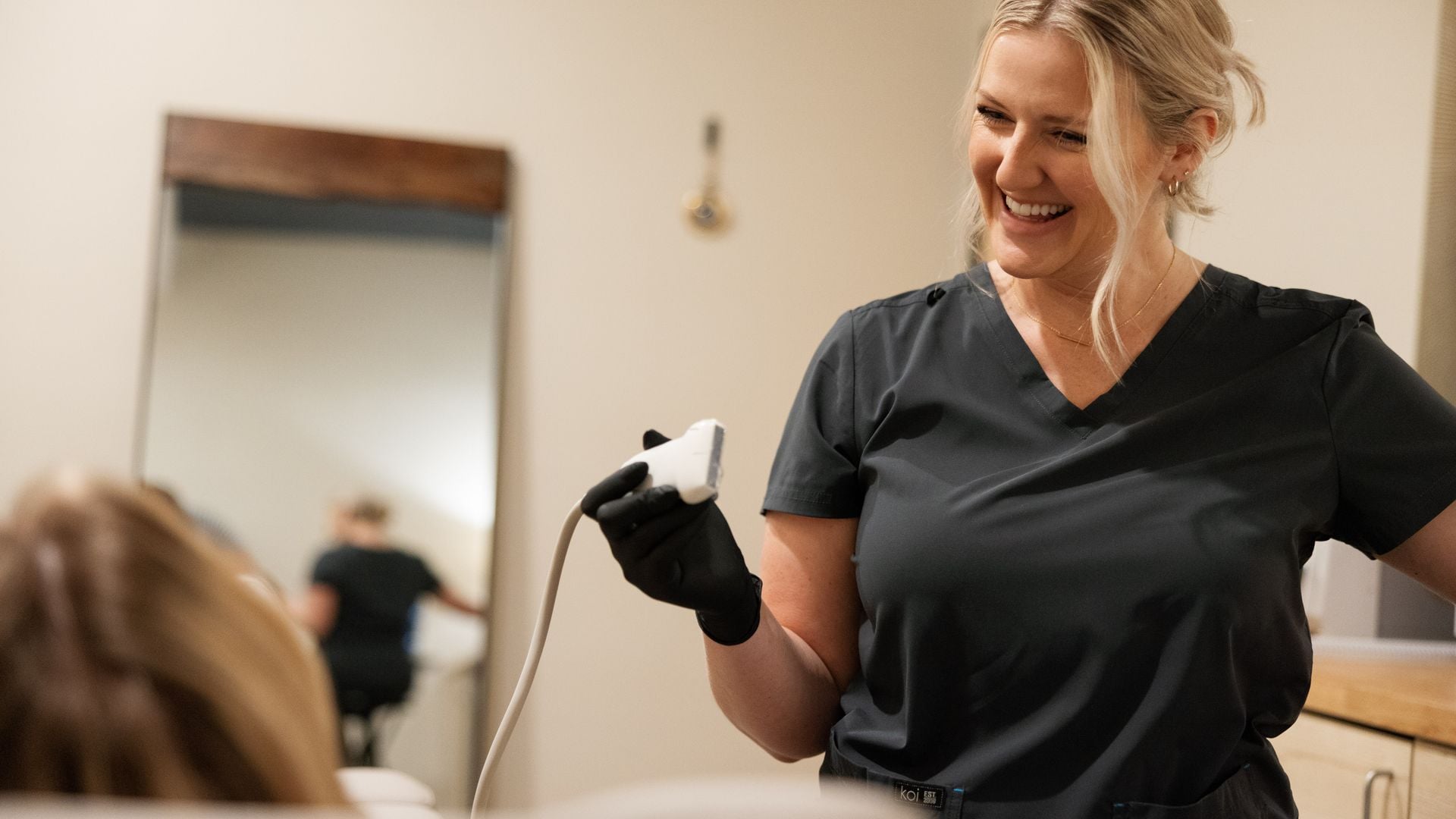
- Unmarked arrival. A sonographer arriving with a discreet equipment case attracts far less attention than a patient arriving at a hospital.
- Flexible locations. A residence, hotel suite, private office, production trailer or yacht can all work if there is a private space with a surface to lie on and an outlet.
- No photography. Our policy prohibits staff from photographing or recording patients or locations. Practices can ask any vendor to confirm the same in writing.
Hotels and residences
Hotels that host high-profile guests are used to discreet medical visits. The patient’s team typically notifies security, arranges a private entrance or escort, and books the visit under the practice’s coordination rather than the patient’s name. In private residences, house staff handle gate access. In both cases, the order notes should carry the access instructions so the sonographer does not need to ask questions at the door.
Families and staff
High-profile patients often have staff who manage their schedule. Assistants can coordinate time and access, but the clinical content should stay between the patient, the ordering physician and the imaging and reading team. The report goes to the ordering physician, who decides with the patient who else hears the result.
Accuracy is part of discretion
Discretion should never cost quality. The study should be the same complete protocol a hospital performs, read by a board-certified radiologist. A rushed or incomplete scan that needs repeating doubles the exposure and the inconvenience.
Questions to ask an imaging provider
- Who will know the patient’s name and details, and why?
- How are reports delivered, and to whom?
- What is the policy on photography and social media for staff?
- How are scheduling messages worded?
- Can the provider work through the practice or the patient’s staff for access and timing?
Building privacy into the practice’s own workflow
Much of a high-profile patient’s privacy depends on what happens inside the ordering practice before the imaging team is involved. Practices that serve public figures often keep a short internal protocol, and imaging fits naturally into it:
- Use the practice’s own scheduling contact. If the patient’s assistant manages the calendar, the practice can pass along only the time window and access details, keeping clinical information inside the practice.
- Keep calendar entries neutral. “Home visit, 2 to 4 p.m.” tells the household staff what they need to know without naming an exam.
- Limit report distribution. Decide in advance whether the report goes only to the ordering physician, or also to a specialist, and record the patient’s preference.
- Record the patient’s communication preferences. HIPAA gives patients the right to request confidential communications, such as using a specific phone number or address. Honor those requests consistently across the practice and its vendors.
Second homes, yachts and production locations
High-profile patients rarely stay in one place. A member may split the season between Malibu and Palm Springs, spend a week on a production in downtown Los Angeles, or host guests at a Rancho Santa Fe estate. Imaging can follow them as long as a few basics are covered: a private space with a door or screen, a bed, couch or padded surface, a standard outlet and a stable floor. Moving vehicles and boats underway are not suitable for diagnostic scanning; a docked vessel or a production trailer parked on site usually works.
For locations with their own security, such as studios, venues and private clubs, the practice or the patient’s team should arrange the sonographer’s access in advance with the security lead. A name on a list at the gate avoids the conversation at the gate.
When discretion and urgency collide
Privacy concerns sometimes push patients to delay care. A patient with a swollen leg may prefer a home duplex tomorrow over an emergency department visit tonight, even when symptoms suggest something more serious. The ordering physician’s judgment about urgency should always come first. Many hospitals offer private entrances and confidential registration for well-known patients, and concierge practices that serve public figures usually know which facilities do this well. Discretion is valuable; it is never a reason to delay emergency care.
After the visit
Discretion continues after the sonographer leaves. Reports should be stored in the practice’s record rather than forwarded to personal email accounts, and any follow-up imaging should be scheduled through the same channel. If the patient wants copies of images or the report, they can request them through the practice or directly, and they should be delivered through a secure method the patient chooses.
A note for the practice’s own team
Even the best vendor protocol fails if the practice’s front desk mentions a patient’s visit in a group chat or leaves a printed report on a shared printer. Brief your team when you begin ordering imaging for high-profile patients: who coordinates, what may be written down, and where reports are filed. Treat the imaging visit with the same care you give every other part of the patient’s record, and review the process once a year or whenever staff change.
Choosing the right level of discretion
Not every well-known patient wants the same thing. Some want no record of a visit beyond the clinical minimum; others are relaxed about the visit but protective of the result. Ask the patient directly what matters most to them, and build the order around that answer rather than assuming.
Discreet imaging across California
UltraVision Imaging performs diagnostic ultrasound at residences, hotels and offices for concierge and private-medicine practices across Los Angeles, including Bel Air, Beverly Hills and Malibu, plus San Diego County, Orange County and Palm Springs, the Bay Area and the Sacramento region. The report goes to the ordering physician. See all regions on our page for physicians. Our team will be in touch to coordinate scheduling.
Frequently asked questions
Can a study be scheduled through the patient’s assistant?
Yes. Assistants or house managers can coordinate timing and access, while clinical details stay with the ordering physician.
How are reports delivered?
The radiologist report goes to the ordering physician through a secure channel, not ordinary email or text.
Can the study be done in a hotel suite or on a production set?
Yes, as long as there is a private space, a surface to lie on and an outlet.
Do staff photograph patients or locations?
No. Our policy prohibits staff from photographing or recording patients or locations.
Is a mobile study as complete as a hospital study?
Yes. It follows the same protocol and is read by a board-certified radiologist.
Which privacy laws apply?
HIPAA and California’s Confidentiality of Medical Information Act both apply to health information in California.
Sources
- HHS: Summary of the HIPAA Privacy Rule
- HHS: Minimum necessary requirement
- California Civil Code: Confidentiality of Medical Information Act (Civil Code 56 et seq.)
- RadiologyInfo.org (ACR and RSNA): General ultrasound
This article is general information for licensed clinicians and practice staff. It is not medical or legal advice and does not replace clinical judgment. UltraVision Imaging performs diagnostic ultrasound; a board-certified radiologist interprets every diagnostic study, and the ordering physician directs care.