
For an 88-year-old with heart failure, a walker and a caregiver who works until five, a trip to a hospital imaging department is not a small thing. It means arranging transport, a wheelchair at the entrance, a long wait, a hard exam table, and an exhausted patient at the end of the day. Many older concierge patients will quietly put off a study rather than go through that. Others go, and pay for it with a fall or a bad night.
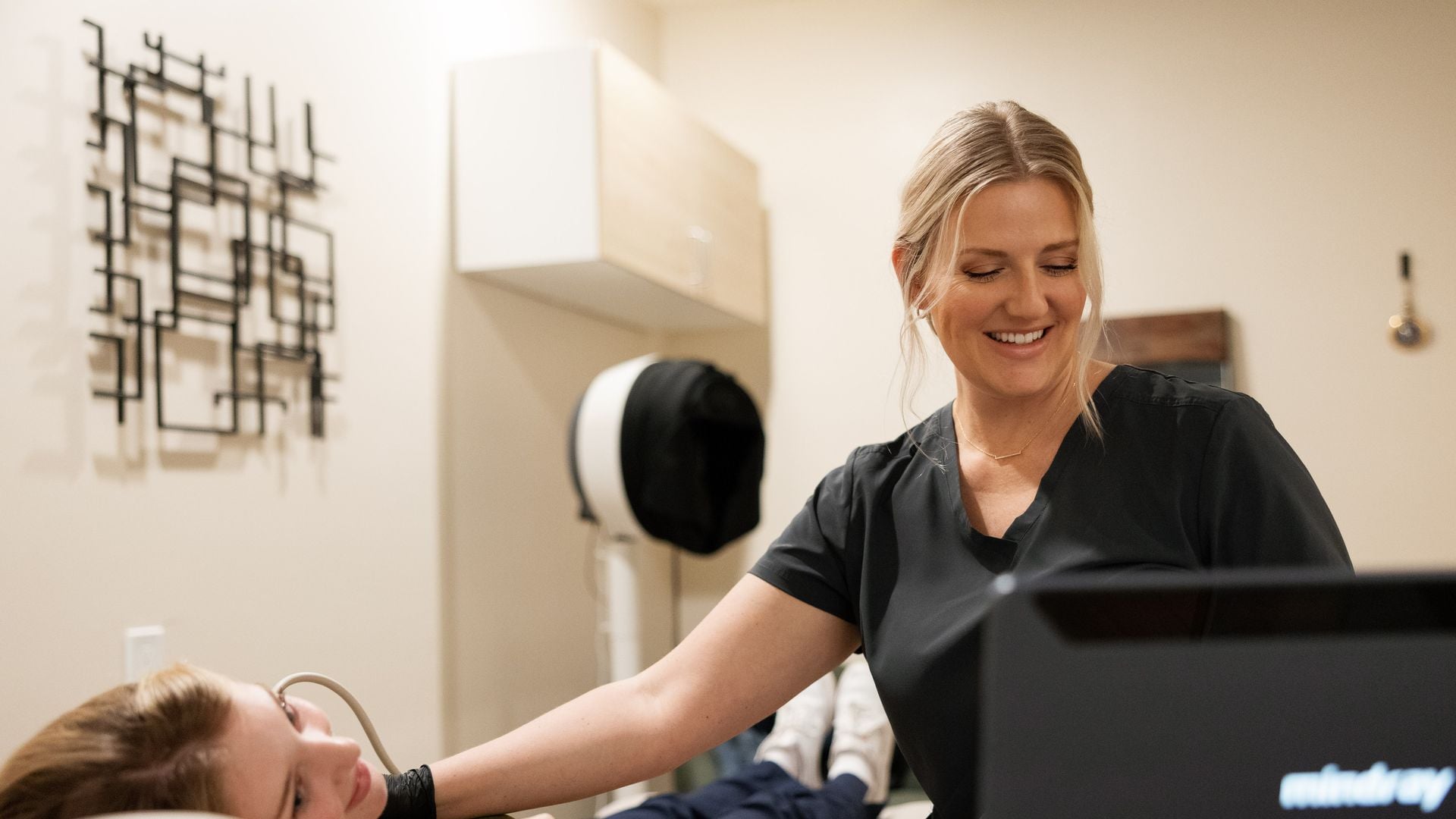
In-home diagnostic ultrasound changes that equation. The study comes to the patient, in their own bed or recliner, with their caregiver in the room. This article covers which studies older and homebound patients need most often, how to plan the visit, and what concierge and house-call practices should think about when they build imaging into geriatric care.
Why ultrasound suits older patients
Ultrasound is portable, uses no ionizing radiation and needs no contrast, which matters for patients with reduced kidney function. It is well tolerated lying semi-reclined, can be paused for comfort, and covers many of the questions that come up in geriatric care.
The studies older patients need most
- Venous duplex. Leg swelling is common in older adults and has many causes: heart failure, venous insufficiency, medications such as calcium-channel blockers, and deep vein thrombosis. A duplex sorts out the vascular question.
- Renal and bladder. Worsening kidney function, recurrent urinary infections, retention or hematuria often lead to a kidney and bladder study, including a post-void residual when ordered.
- Abdominal. Right upper quadrant pain, abnormal liver tests, unexplained weight loss or a pulsatile mass.
- Abdominal aorta. One-time screening for eligible men aged 65 to 75 who have ever smoked, and follow-up of a known aneurysm.
- Thyroid. A palpable nodule or goiter, or follow-up of a known nodule.
- Soft tissue. A new lump, a suspected fluid collection or a Baker’s cyst behind the knee.
Planning a safe, dignified visit
Older patients deserve a visit planned around them, not around the equipment. Details that make a difference:
- Positioning. Most studies can be done semi-reclined in a bed, hospital bed or recliner. Patients who cannot lie flat because of breathlessness or back pain can usually still be scanned.
- Caregivers. A family member or caregiver can stay in the room. For patients with cognitive impairment, a familiar person nearby keeps the visit calm.
- Consent and decision-making. If the patient has a health care agent or conservator, the practice should note it in the order so the right person is present and informed.
- Preparation. Fasting for an abdominal study can be hard for patients with diabetes or frailty. The ordering physician should decide whether fasting is appropriate and adjust medication timing if needed.
- Skin. Fragile skin bruises easily. Sonographers use gentle pressure and warm gel, and the order should mention wounds, dressings or pressure injuries near the area being scanned.
- Time. Plan for a little longer than a standard visit. Rushing an older patient helps no one.
Communication with the family
In many concierge relationships, an adult child is the main point of contact. Decide in advance, and document, who the imaging team should coordinate scheduling with and who will hear results. The radiologist report goes to the ordering physician, who explains it to the patient and, with the patient’s permission, the family.
When the hospital is still the right place
Home imaging is for stable patients with a defined question. New confusion, chest pain, shortness of breath, a fall with suspected fracture or head injury, severe abdominal pain, or signs of sepsis belong in the emergency department. So do patients who need CT, MRI or treatment that only a hospital can provide.
Paying for in-home imaging
Many concierge practices include imaging coordination in their membership and handle the cost of the study separately. UltraVision is a self-pay service and does not bill Medicare or other insurance. Practices with Medicare-age members should confirm with their own advisors how cash-pay diagnostic services are handled for those patients.
Cognitive impairment and dementia
Patients with dementia often find hospital visits disorienting, and the stress can show up as agitation or a bad night afterward. A home study removes most of the triggers: no unfamiliar building, no waiting room, no transfer to a hard table. A few adjustments help further. Schedule the visit at the patient’s best time of day, usually late morning for many people with dementia. Keep a familiar caregiver in the room. Explain each step briefly before it happens, and allow pauses. If the patient becomes distressed, the sonographer stops; a partial study can sometimes be completed later rather than forcing it through.
Patients on anticoagulation or with fragile skin
Many older patients take blood thinners, and their skin bruises easily. Ultrasound uses gentle probe pressure and gel, so it is rarely a problem, but sonographers adjust pressure for these patients and avoid areas with skin tears or dressings. The order should mention pressure injuries, wounds or ostomies near the area being scanned.
Hospice and palliative care
For patients in hospice or palliative care, imaging is ordered only when the answer will change comfort-focused care, for example confirming a large bladder before placing a catheter, or checking for a fluid collection causing pain. When it is ordered, the home setting is usually the only reasonable place to do it. The visit should be short, and the patient’s comfort guides every decision about positioning and duration.
Facilities: assisted living and memory care
Concierge physicians often follow patients who live in assisted living or memory care communities. Studies can be performed in the resident’s apartment or a private room. The facility may have its own visitor process, and some require advance notice of outside clinicians. Include the community’s name, the resident’s unit, the front-desk number and the name of the care coordinator in the order.
Follow-up planning
Older patients are more likely to have findings that need follow-up, such as a kidney cyst, a thyroid nodule or a small aortic aneurysm. Because the report goes to the ordering physician, the practice can decide with the patient and family whether follow-up imaging fits the patient’s goals, and schedule it at home when it does.
Coordinating with home health and caregivers
Many homebound patients already have a home health nurse, physical therapist or private caregiver visiting on a schedule. Lining up the imaging visit with a time the caregiver is present helps with positioning, preparation and reassurance. If a home health agency is involved, the ordering physician can share the report with the agency’s clinicians as appropriate, so the care team works from the same information. A short note in the order, such as “caregiver present Tuesdays and Thursdays, 9 to 1,” makes scheduling far easier.
A short checklist for the ordering office
- Patient name, mobile number and the best contact person (often an adult child or caregiver).
- Exact address, unit number and access instructions for the home or community.
- Mobility and positioning limits, wounds or dressings near the scan area.
- Whether fasting is appropriate, and any medication timing changes.
- Health care agent or conservator, if applicable, and who should be present.
- Who receives the report and who will explain it to the family.
A model for geriatric concierge care
Practices that do this well treat imaging the way they treat home lab draws: a routine extension of the house call. The physician identifies the question, places the order with the clinical details and the family contact, the imaging team coordinates timing, and the report comes back to the physician who knows the patient best.
UltraVision Imaging performs in-home diagnostic ultrasound for older and homebound patients of concierge, house-call and private-medicine practices across the Sacramento region, the Bay Area, Los Angeles, San Diego County and Orange County and Palm Springs. A board-certified radiologist reads every study. See all regions on our page for physicians. Our team will be in touch to coordinate scheduling.
Frequently asked questions
Can a patient who cannot lie flat have an ultrasound at home?
Usually yes. Most studies can be performed semi-reclined in a bed or recliner.
Can a caregiver stay in the room?
Yes. A family member or caregiver is welcome, and helpful for patients with cognitive impairment.
Is ultrasound safe for patients with kidney disease?
Ultrasound uses no ionizing radiation and no contrast, so kidney function is not a barrier to the study.
Should a frail patient fast before an abdominal ultrasound?
The ordering physician decides, especially for patients with diabetes or frailty, and adjusts medication timing if needed.
Who explains the results to the family?
The ordering physician receives the radiologist report and explains it to the patient and, with permission, the family.
Does UltraVision bill Medicare?
No. UltraVision is a self-pay service. Practices should confirm with their advisors how cash-pay services are handled for Medicare-age members.
Sources
- USPSTF: Abdominal aortic aneurysm screening (2019)
- RadiologyInfo.org (ACR and RSNA): Venous ultrasound
- RadiologyInfo.org (ACR and RSNA): Kidney and bladder ultrasound
- National Institute on Aging: Health care for older adults
- FDA: Ultrasound imaging
This article is general information for licensed clinicians and practice staff. It is not medical or legal advice and does not replace clinical judgment. UltraVision Imaging performs diagnostic ultrasound; a board-certified radiologist interprets every diagnostic study, and the ordering physician directs care.