
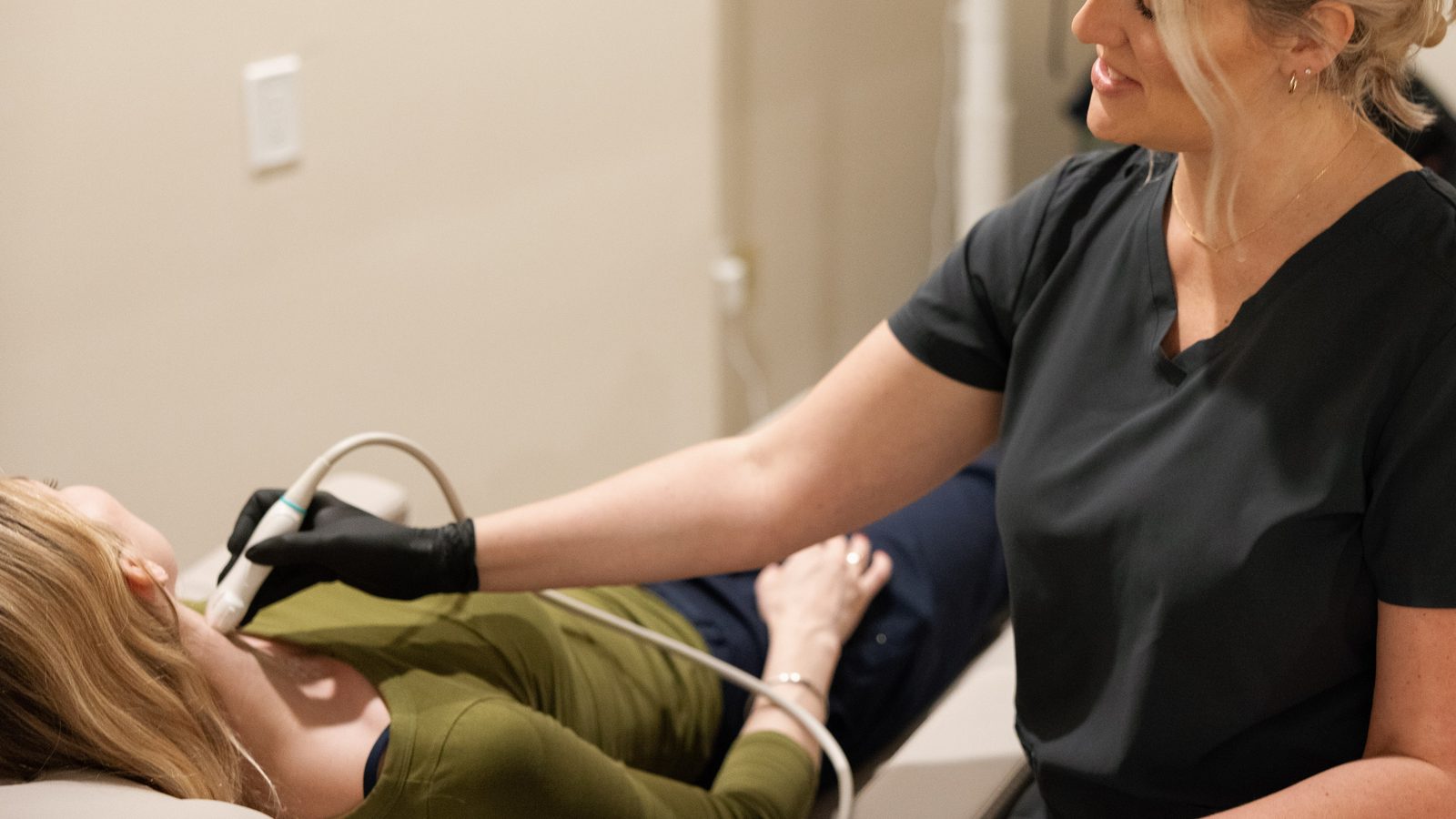
Executive physicals and longevity programs have become one of the fastest-growing parts of concierge medicine. Members expect a thorough look under the hood, and imaging is often part of the package. Ultrasound is attractive for this: no radiation, no contrast, portable, and well tolerated. But not every ultrasound that can be done should be done in a person without symptoms, and the evidence differs sharply from one study to the next.
This guide walks through the ultrasound studies most often requested in executive and longevity programs, what the U.S. Preventive Services Task Force (USPSTF) and specialty guidance say about each, and how practices can build an imaging component that is defensible as well as attractive.
A framework: screening, case-finding and baseline
It helps to separate three reasons for ordering an ultrasound in a patient without symptoms:
- Population screening, where a guideline body has weighed benefits and harms for a defined group. USPSTF recommendations are the usual reference.
- Risk-based case-finding, where something in the history, exam or labs raises the probability of disease, such as abnormal liver tests or a palpable thyroid nodule. That is no longer screening; it is a diagnostic question.
- Baseline documentation, which some programs offer for future comparison. This is where expectations need the most care, because incidental findings are common.
Abdominal aortic aneurysm
This is the strongest screening case for ultrasound. The USPSTF (2019) recommends one-time ultrasound screening for AAA in men aged 65 to 75 who have ever smoked (grade B), and selective screening in men 65 to 75 who have never smoked, based on individual risk (grade C). It recommends against routine screening in women who have never smoked and have no family history (grade D) and found insufficient evidence for women who have smoked or have a family history (I statement).
For a longevity program with older male members, an aorta measurement is easy to justify, quick to perform, and produces a durable baseline.
Carotid arteries
Carotid duplex is frequently requested and frequently misunderstood. The USPSTF (2021) recommends against screening for asymptomatic carotid artery stenosis in the general adult population (grade D), citing the low prevalence of significant stenosis and the harms of downstream procedures. Carotid intima-media thickness (CIMT) has been studied as a cardiovascular risk marker, but major cardiology guidance does not recommend routine CIMT measurement for risk assessment in the general population.
That does not mean a carotid study is never appropriate. A bruit, transient neurologic symptoms or other clinical findings make it a diagnostic study. Programs that include carotid imaging for asymptomatic members should be explicit with members about what it can and cannot tell them, and about what happens if something is found.
Thyroid
The USPSTF (2017) recommends against screening for thyroid cancer in asymptomatic adults (grade D), largely because screening finds many small, slow-growing cancers and leads to overtreatment. Thyroid ultrasound is appropriate when there is a palpable nodule, a goiter, abnormal thyroid function with a structural question, a relevant radiation history or a strong family history of certain thyroid cancers. When ordered, a report that uses ACR TI-RADS gives the physician a clear, evidence-based next step.
Liver and abdomen
Metabolic dysfunction-associated steatotic liver disease (MASLD, the newer name for fatty liver disease) is common among executive-physical patients. Current liver society guidance focuses on risk stratification with blood-based scores such as FIB-4, followed by elastography in selected patients, rather than ultrasound screening of everyone. Ultrasound remains useful when liver tests are abnormal, when there is a clinical question about the gallbladder, bile ducts or kidneys, and to document steatosis in a patient already identified as at risk.
Kidneys, pelvis and others
Renal ultrasound is valuable for hematuria, abnormal kidney function, hypertension work-up in selected patients or a history of stones, but it is not a recommended screening test in the general population. The USPSTF also recommends against screening for ovarian cancer in asymptomatic women (grade D, 2018). Pelvic ultrasound belongs in the diagnostic category, ordered for symptoms or specific clinical questions.
Incidental findings: plan before you scan
Every imaging program in asymptomatic people will produce incidental findings: simple renal cysts, small thyroid nodules, hepatic hemangiomas, adrenal or pancreatic findings that need follow-up imaging. A good program decides in advance who receives the report, who explains it, how follow-up recommendations are tracked, and how members are told before the scan that findings may lead to more tests. That conversation is part of informed consent, and it protects the relationship as much as the patient.
A defensible imaging menu
Many concierge physicians settle on a short menu:
- An abdominal aorta study for members who meet USPSTF criteria.
- Diagnostic studies, such as thyroid, abdominal, renal, venous or carotid, ordered when history, exam or labs raise a specific question.
- Optional baseline studies only after a documented conversation about incidental findings and the limits of screening.
That approach gives members the access they expect while keeping the imaging defensible.
Shared decision-making in practice
Executive and longevity patients are often highly motivated and well read. Many arrive asking for “a full-body scan” or a list of tests they saw recommended online. A structured conversation helps: what the test can find, how often it finds something that does not matter, what would happen next if it found something, and whether the result would change what the patient does. Documenting that conversation protects both the patient and the practice, and patients who understand the trade-offs are more satisfied with the plan, whatever they choose.
Building an annual imaging calendar
Practices with large executive panels can make imaging predictable by building an annual calendar for each member: eligible screening studies, follow-up of prior findings, and diagnostic studies prompted by the annual exam and labs. Scheduling those studies at the member’s home or office, on a day that suits their calendar, turns imaging into part of the membership experience rather than an errand.
Measuring the program
A good imaging component should be reviewable. Track how many studies were ordered and why, how many found something actionable, how many incidental findings led to further testing and what those tests showed, and how members rated the experience. Those numbers help the practice refine its menu each year and answer the question every thoughtful member eventually asks: is this testing actually helping?
Keeping up with changing guidance
USPSTF recommendations are revisited every several years, and specialty societies update their guidance more often. Assign someone in the practice to review relevant updates once a year, especially for AAA, carotid, thyroid and liver disease, and adjust the program accordingly.
Where mobile imaging fits the executive schedule
Executive members often cancel or postpone imaging when it requires a half-day trip to a hospital. A study at the member’s office between meetings, or at home early in the morning, removes the most common reason for delay. Pairing the imaging visit with a home lab draw on the same morning keeps the annual assessment compact.
Performing the studies at home or the office
Executive members value time above almost anything. UltraVision Imaging performs abdominal aorta, abdominal, thyroid, renal, carotid and venous studies at members’ homes and offices for concierge and executive-health practices in Los Angeles, San Diego County, Orange County and Palm Springs, the Bay Area and the Sacramento region. A board-certified radiologist reads every study and the report goes to the ordering physician. See all regions on our page for physicians. Our team will be in touch to coordinate scheduling.
Frequently asked questions
Does the USPSTF recommend AAA screening?
Yes, for men aged 65 to 75 who have ever smoked (one-time screening, grade B), and selectively for men in that age range who never smoked (grade C).
Should carotid ultrasound be part of an executive physical?
The USPSTF recommends against screening asymptomatic adults for carotid stenosis (grade D, 2021). Carotid studies are appropriate when there are clinical findings or symptoms.
Is thyroid ultrasound a good screening test?
The USPSTF recommends against thyroid cancer screening in asymptomatic adults (grade D, 2017). It is appropriate for a palpable nodule or specific clinical questions.
How is fatty liver evaluated in longevity programs?
Liver society guidance emphasizes risk scores such as FIB-4 and elastography in selected patients. Ultrasound helps when liver tests are abnormal or there is a structural question.
What should members be told before baseline imaging?
That incidental findings are common and may lead to more tests, who will explain the report, and how follow-up will be handled.
Can these studies be done at a member’s office?
Yes. Most studies need only a private room, a table or couch and an outlet.
Sources
- USPSTF: Abdominal aortic aneurysm screening (2019)
- USPSTF: Asymptomatic carotid artery stenosis screening (2021)
- USPSTF: Thyroid cancer screening (2017)
- USPSTF: Ovarian cancer screening (2018)
- Rinella ME et al. AASLD practice guidance on the clinical assessment and management of NAFLD. Hepatology 2023
This article is general information for licensed clinicians and practice staff. It is not medical or legal advice and does not replace clinical judgment. UltraVision Imaging performs diagnostic ultrasound; a board-certified radiologist interprets every diagnostic study, and the ordering physician directs care.