
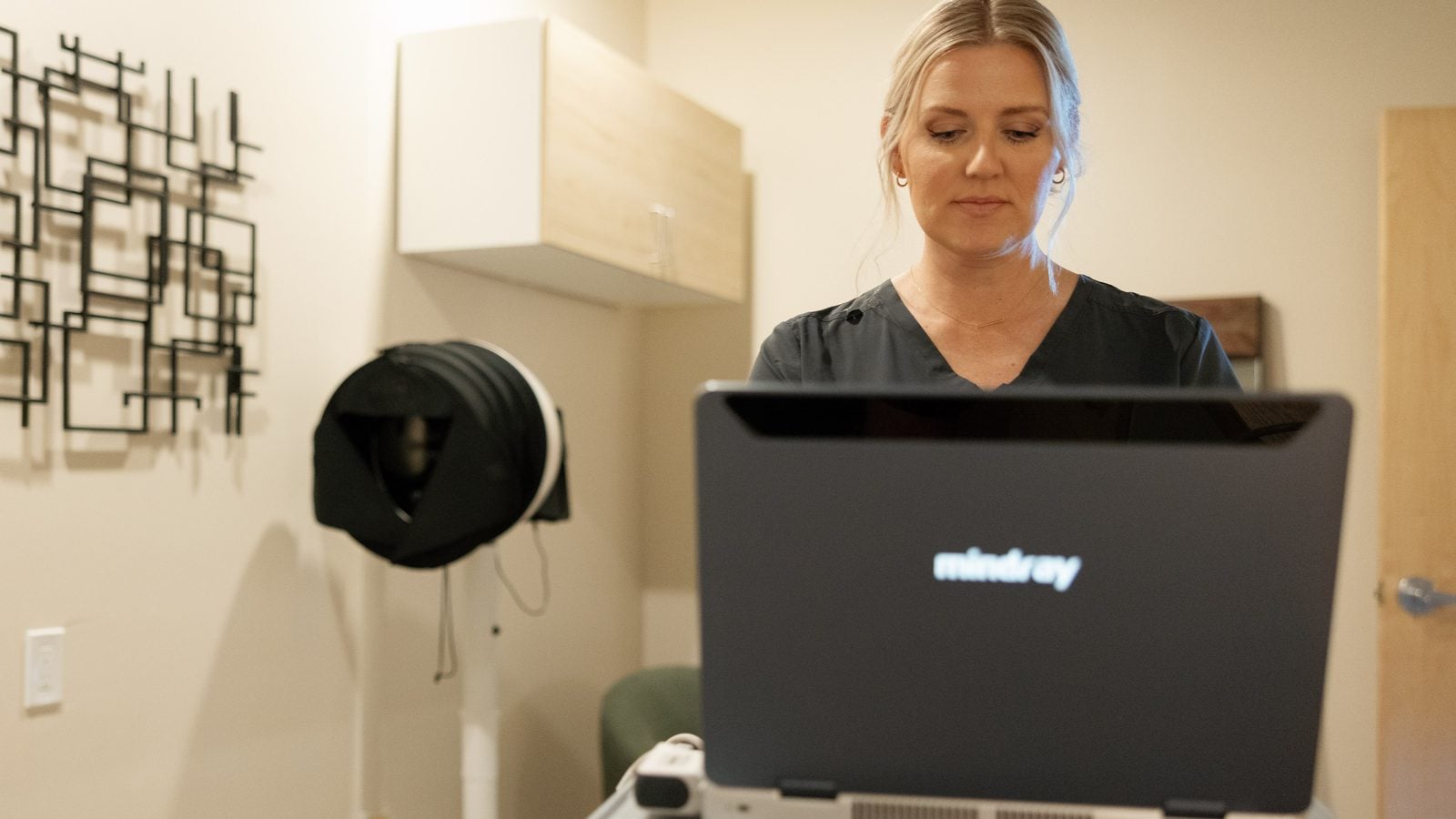
Whole-body MRI screening has moved from a niche offering to something many people now hear about from friends, colleagues and their own inbox. The appeal is easy to understand: one long scan, no radiation, and the sense of having looked everywhere at once. Targeted ultrasound sits at the other end of the spectrum. It looks closely at one or two specific organs, a radiologist reads it, and it answers a narrower question. The two are not interchangeable, and neither replaces the screening tests your own doctor already recommends for you.
This guide explains what each approach can and can’t image, what the American College of Radiology (ACR) and the U.S. Preventive Services Task Force (USPSTF) say about scanning people who have no symptoms, what recent research shows about incidental findings, and the questions worth bringing to your physician before booking any preventive scan. It is written for readers who prefer to make decisions with the evidence in front of them.
One point to make plainly at the start: we never diagnose. Our sonographer performs the scan, a board-certified radiologist reads the images and writes the report, and your own doctor interprets that report for you in the context of your history, labs and symptoms. Nothing here tells you which scan you need or what any result would mean for you. That conversation belongs with your physician.
What whole-body MRI screening is
Whole-body MRI screening is sold directly to consumers by whole-body MRI screening companies and by some imaging centers. A typical session images large parts of the body in one visit, often the head, neck, chest, abdomen and pelvis, and sometimes the spine. MRI uses a strong magnetic field and radio waves rather than X-rays. RadiologyInfo, the patient information site of the ACR and the Radiological Society of North America (RSNA), notes that body MRI “does not use radiation (x-rays)” and that high-quality images depend on the patient’s ability to stay still and follow breath-holding instructions.
Protocols vary from one provider to the next. Some use contrast and most do not. Some sessions are shorter, others much longer. Because there is no single standard screening protocol, two scans sold under similar names may not look at the same structures in the same way, a point that recent research also makes. If you are considering one, ask the provider exactly what is and isn’t included, who reads the images, and how a finding that needs follow-up is handled. Then talk with your doctor about whether it fits your situation at all.
What the American College of Radiology says
On April 17, 2023, the ACR published its Statement on Screening Total Body MRI. It opens: “The American College of Radiology® (ACR®), at this time, does not believe there is sufficient evidence to justify recommending total body screening for patients with no clinical symptoms, risk factors or a family history suggesting underlying disease or serious injury.”
The statement goes on to say that there is no documented evidence that total body screening is cost-efficient or effective in prolonging life, and that the ACR is concerned the approach will produce many nonspecific findings that lead to further tests, procedures and expense without improving health. The ACR said it would keep monitoring studies on the question. At the time of writing, the 2023 statement is still the position published on the ACR’s site.
Two details are worth noticing. First, the statement concerns people with no symptoms, risk factors or family history. Someone with a specific medical reason for imaging is in a different situation, and their doctor may order MRI, ultrasound or another test for that reason. Second, “insufficient evidence” is not the same as “proven harmful.” It means the studies that would show whether screening healthy people this way improves their health have not been done well enough to support a recommendation. Your doctor can help you weigh what that means for you.
What the research shows about incidental findings
An incidental finding is something seen on a scan that is unrelated to the reason for the scan. Many are harmless, but a good number can’t be confirmed as harmless from the images alone, so the report may suggest more imaging, a specialist visit or, sometimes, a biopsy. This is true of every kind of imaging, ultrasound included. A whole-body scan simply looks at more of the body, so there are more opportunities for them. Three sources give a sense of the numbers:
| Source | What it looked at | What it reported |
|---|---|---|
| Gibson and colleagues, BMJ, 2018 (systematic review and meta-analysis) | Potentially serious incidental findings on brain and body MRI in apparently asymptomatic adults | Pooled prevalence on whole-body (brain and body) MRI of 3.9%, with a very wide range between studies (95% CI 0.4% to 27.1%). In the five studies that followed people up systematically, about one in five such findings (48 of 234, 20.5%) had a serious final diagnosis. |
| Martins da Fonseca and colleagues, European Radiology, 2025 (systematic review and meta-analysis) | Ten studies, 9,024 asymptomatic adults who had whole-body MRI | A pooled confirmed cancer detection rate of 1.57%. The authors cited frequent incidental findings, unstandardized protocols and a lack of long-term outcome or cost-effectiveness data as limits on its current clinical usefulness. |
| One academic program’s early experience, RSNA News, July 2026 | About 160 patients in the program’s first 18 months | About 90% had some finding, most not needing follow-up; about 30% had findings that were not inherently worrisome but still needed follow-up; about 1% were malignant or suspected malignant. |
Read together, these figures say something useful about populations without saying anything about you. Whole-body MRI does find some cancers in people who feel well. It also produces many findings that need follow-up, most of which turn out not to be serious, and there are not yet long-term studies showing that people screened this way live longer or healthier lives. The width of the range in the BMJ review shows how much results depend on the protocol and the population.
Follow-up has real costs: more appointments, sometimes a repeat scan with contrast, an occasional biopsy, time away from work and, for many people, weeks of uncertainty. The best time to ask your doctor how they would handle an unexpected finding is before any screening scan, not after it.
Radiation: MRI, ultrasound and CT
Neither MRI nor ultrasound uses ionizing radiation. RadiologyInfo states that ultrasound “does not use radiation” and that MRI “does not use radiation (x-rays).” Our post Is ultrasound safe? covers the safety of ultrasound in more detail.
CT is the useful contrast here. The U.S. Food and Drug Administration (FDA) notes that CT involves relatively high radiation exposure compared with most other X-ray exams, that the radiation from a whole-body CT scan “may be associated with a very small increase in the possibility of developing cancer” later in life, and that it “knows of no scientific evidence demonstrating that whole-body scanning” of people without symptoms provides more benefit than harm. We mention CT only for comparison. We do not perform CT or MRI.
Some MRI exams use a gadolinium contrast agent. RadiologyInfo notes that doctors typically check kidney function before giving it, and that tiny amounts may remain in the body after multiple exams. The ultrasound scans we perform involve no injections and no contrast. If contrast has been suggested for any scan, ask your doctor why it is needed and whether it is right for you.
What ultrasound can and can’t image
Ultrasound builds pictures from returning sound echoes. It is very good at solid organs and fluid-filled structures, and with Doppler it can show blood flow. It also has hard physical limits. RadiologyInfo explains that ultrasound waves are disrupted by air or gas, that ultrasound “cannot penetrate bone,” that it is not ideal for the air-filled bowel or lungs, and that larger patients are more difficult to image.
| Area | How well ultrasound sees it | Notes |
|---|---|---|
| Liver, gallbladder, pancreas, spleen, kidneys | Well suited | Covered by a complete abdominal ultrasound; bowel gas can hide parts of the pancreas |
| Abdominal aorta | Well suited | Used to measure aortic diameter in AAA screening |
| Carotid arteries in the neck | Well suited | A duplex study shows blood flow and plaque; ours includes CIMT |
| Thyroid | Well suited | Close to the skin, so images are highly detailed |
| Bladder and prostate (scanned over the belly) | Suitable | Needs a full bladder |
| Uterus and ovaries | Suitable | Transabdominal, with an optional transvaginal part |
| Breast | Suitable for targeted questions | Does not replace a mammogram |
| Testicles and scrotum | Well suited | No prep needed |
| Bowel | Limited | Gas blocks the sound waves |
| Lungs | Limited | Air blocks the sound waves |
| Brain in adults | Not imaged | The skull is bone, which sound does not pass through |
| Bones and spine | Not imaged | Sound does not penetrate bone |
In other words, a set of targeted ultrasound scans can’t cover what a whole-body MRI attempts to cover, and it isn’t trying to. Each scan answers a specific question about a specific organ. Our post Can an ultrasound detect cancer? explains why a scan on its own is not a verdict. Your doctor can tell you which, if any, of those questions are worth asking for you.
What the USPSTF says about screening people without symptoms
The USPSTF is an independent volunteer panel of national experts that reviews the evidence on preventive services. Its recommendations apply to people without signs or symptoms. Several of its current final recommendations involve organs that ultrasound can image. Each grade below was checked on the Task Force’s own recommendation pages.
| Topic (year) | Who it applies to | Grade and recommendation |
|---|---|---|
| Abdominal aortic aneurysm (2019) | Men 65 to 75 who have ever smoked | B: one-time screening with ultrasonography |
| Abdominal aortic aneurysm (2019) | Men 65 to 75 who have never smoked | C: clinicians selectively offer screening rather than routinely screening all men in this group |
| Abdominal aortic aneurysm (2019) | Women who have never smoked and have no family history of AAA | D: recommends against routine screening |
| Abdominal aortic aneurysm (2019) | Women 65 to 75 who have ever smoked or have a family history of AAA | I: the evidence is insufficient to assess benefits and harms |
| Carotid artery stenosis (2021) | Asymptomatic adults in the general population | D: recommends against screening |
| Thyroid cancer (2017) | Asymptomatic adults | D: recommends against screening |
| Ovarian cancer (2018) | Asymptomatic women not known to have a high-risk hereditary cancer syndrome | D: recommends against screening |
| Pancreatic cancer (2019) | Asymptomatic adults not known to be at high risk | D: recommends against screening |
According to the USPSTF grade definitions, a D grade means there is “moderate or high certainty that the service has no net benefit or that the harms outweigh the benefits.” An I statement means the evidence is lacking, of poor quality or conflicting. These grades don’t apply to someone with symptoms, a known condition or a specific reason a doctor has given for imaging. They are also conclusions about populations, not decisions about one person.
A wellness scan of a person without symptoms is a personal choice. If you make it, make it knowing what these bodies have concluded, knowing that any scan can turn up incidental findings that lead to more tests, and after you talk with your doctor before booking.
Where targeted ultrasound fits
Our approach is narrow by design. We perform targeted, diagnostic ultrasound of specific organs, and a board-certified radiologist reads every study and writes a report, which is ready within 24 hours. The report goes to you and to the doctor you name. We do not offer whole-body imaging of any kind, and no combination of our scans is a substitute for one.
Some people, after talking with their doctor, choose a pair of targeted scans that look at related organs in one visit. Common pairings include:
- Abdomen and thyroid: a complete abdominal ultrasound (liver, gallbladder, kidneys, pancreas, spleen and aorta) with a thyroid ultrasound.
- Carotid and aorta: a carotid duplex (neck arteries, blood flow and plaque, with CIMT) with AAA screening of the abdominal aorta.
- Prostate and kidneys: a prostate ultrasound scanned over the belly with a renal ultrasound of the kidneys and bladder.
- Pelvis and both breasts: a pelvic ultrasound, with or without the transvaginal part, with a breast ultrasound of both sides.
Each pairing has USPSTF context worth discussing first. AAA screening carries a B grade for men 65 to 75 who have ever smoked, while screening for carotid stenosis, thyroid cancer and ovarian cancer in people without symptoms carries a D grade. A breast ultrasound does not replace a mammogram. Our posts on abdomen-and-thyroid screening and carotid and aorta screening go into more depth. Ask your doctor whether a targeted scan has a specific purpose for you, and how they would follow up anything the report describes.
Questions to ask your doctor before any preventive scan
Whether you are weighing whole-body MRI, a targeted ultrasound or neither, these questions tend to make the conversation with your physician more productive:
- What specific question would this scan answer for me, given my history and my family history?
- Am I due for any USPSTF-recommended screening tests that should come first?
- Does the USPSTF have a grade for this scan in someone like me, and how does it apply to my situation?
- What incidental findings are common with this kind of scan, and how would we handle one?
- If the report suggests follow-up, who would arrange it, and what might it involve?
- Would a normal report change anything about my care, or would we do the same things either way?
- Is a whole-body scan, a targeted scan or no scan the better fit for me right now?
- If I go ahead, will you review the report with me, and how soon?
Questions for the imaging provider matter just as much. Is the person performing the scan credentialed (for ultrasound, ask about ARDMS registration)? Does a board-certified radiologist read every study? How soon is the report ready, and exactly where does it go? Is contrast used, and why? Clear, specific answers are a good sign. Then bring what you learn back to your doctor.
Symptoms are not a screening question: when to call 911
A preventive scan, whether MRI or ultrasound, is meant for people who feel well. If something is wrong now, a scheduled screening appointment is the wrong place to find out. We are not an emergency service. Call 911 or go to the nearest emergency department for any of the following:
- Possible stroke. Cleveland Clinic uses BE FAST: trouble with balance, sudden vision changes in one or both eyes, drooping on one side of the face, weakness in an arm or leg, slurred speech or trouble understanding, and Time, meaning call 911 right away rather than waiting to see if symptoms pass.
- Possible blood clot in the lungs. The CDC lists difficulty breathing, a faster than normal or irregular heartbeat, chest pain that usually worsens with a deep breath or cough, coughing up blood, and very low blood pressure, lightheadedness or fainting, and says to seek medical help immediately.
- Possible ruptured aortic aneurysm. Mayo Clinic describes sudden, very bad and long-lasting belly or back pain that may feel like ripping or tearing, with low blood pressure and a fast pulse.
- Any other sudden, severe symptom that worries you.
For new symptoms that are not an emergency, such as a lump, a change in bowel or bladder habits, or unexplained weight loss, contact your doctor. Those call for an evaluation directed by a physician, not a screening scan.
Getting a targeted scan with us
If you and your doctor decide a targeted scan makes sense, you can book online on our booking page. Most scans can be booked directly without a referral. DVT vein studies and the second-trimester anatomy scan require one, which you upload in the booking form. The form asks for the name of the doctor who should receive the report (type “None” if you don’t have one) and offers an optional referral upload. Our post Do you need a referral for an ultrasound? has more detail.
Visits take place at our clinic, or we bring the scan to you across our California service areas with a portable diagnostic system. Payment is a flat rate paid when you book, with no facility fee. HSA and FSA cards are accepted. We don’t bill insurance, but a superbill is available if you want to ask your plan about reimbursement.
| Scan | Prep |
|---|---|
| Complete or limited abdominal, AAA screening | Nothing to eat for 8 hours; water and regular medications are fine |
| Renal (kidneys and bladder), prostate, pelvic transabdominal | Full bladder: 32 oz of water finished an hour before; don’t empty |
| Pelvic with transvaginal | Full bladder for the first part, then empty before the transvaginal part |
| Thyroid | No prep; wear an open neckline |
| Breast | No lotion, powder or deodorant |
If you book two scans together, follow the prep for both: for example, fasting for the abdomen plus an open neckline for the thyroid. Our guide How to prepare for an ultrasound explains the reasons behind each rule.
Our sonographer won’t give results at the visit; our post Why won’t the sonographer tell me what they see? explains why. A board-certified radiologist reads every study, the report is ready within 24 hours, and your doctor interprets it for you. See What does my ultrasound report mean? for how reports are organized.
Sources
- American College of Radiology: ACR Statement on Screening Total Body MRI (April 17, 2023)
- Gibson LM et al. Potentially serious incidental findings on brain and body MRI of apparently asymptomatic adults: systematic review and meta-analysis. BMJ 2018;363:k4577
- Martins da Fonseca J et al. Whole-body MRI for opportunistic cancer detection in asymptomatic individuals: a systematic review and meta-analysis. European Radiology, 2025
- RSNA News: Whole-Body MRI Expands, Leaving Patients Weighing Risks (July 2026)
- U.S. Food and Drug Administration: Full-Body CT Scans, What You Need to Know
- RadiologyInfo.org: General Ultrasound
- RadiologyInfo.org: Magnetic Resonance Imaging (MRI) of the Body
- USPSTF: Abdominal Aortic Aneurysm: Screening (2019)
- USPSTF: Asymptomatic Carotid Artery Stenosis: Screening (2021)
- USPSTF: Thyroid Cancer: Screening (2017)
- USPSTF: Ovarian Cancer: Screening (2018)
- USPSTF: Pancreatic Cancer: Screening (2019)
- USPSTF: Grade Definitions
- Cleveland Clinic: Signs of a Stroke, Act Quickly With BE FAST
- CDC: About Venous Thromboembolism (Blood Clots)
- Mayo Clinic: Abdominal aortic aneurysm, symptoms and causes
Frequently asked questions
Is whole-body MRI better than ultrasound for preventive screening?
They do different jobs. Whole-body MRI images large parts of the body in one session, while targeted ultrasound looks closely at specific organs such as the thyroid, liver, kidneys or aorta. Neither is a general substitute for the other. In April 2023 the American College of Radiology said there is not sufficient evidence to recommend total body screening for people with no symptoms, risk factors or family history. Talk with your doctor about which, if either, fits your situation.
What does the American College of Radiology say about whole-body screening?
In its Statement on Screening Total Body MRI, dated April 17, 2023, the ACR said it does not believe there is sufficient evidence to justify recommending total body screening for patients with no clinical symptoms, risk factors or a family history suggesting underlying disease or serious injury. It also noted no documented evidence that such screening is cost-efficient or prolongs life, and raised concern about nonspecific findings leading to more tests.
Does whole-body MRI or ultrasound use radiation?
No. Neither MRI nor ultrasound uses ionizing radiation. CT does use X-rays, and the FDA notes that the radiation from a whole-body CT scan may be associated with a very small increase in the possibility of developing cancer later in life. We perform ultrasound only; we do not perform CT or MRI.
What does the USPSTF recommend for screening people without symptoms?
For abdominal aortic aneurysm, the USPSTF recommends one-time ultrasound screening for men 65 to 75 who have ever smoked (B), selective screening for men 65 to 75 who have never smoked (C), against routine screening in women who have never smoked and have no family history (D), and finds the evidence insufficient for women 65 to 75 who have ever smoked or have a family history (I). It recommends against screening asymptomatic adults for carotid artery stenosis, thyroid cancer and pancreatic cancer, and asymptomatic women for ovarian cancer (all D). Ask your doctor how these apply to you.
What is an incidental finding?
An incidental finding is something seen on a scan that is unrelated to the reason for the scan. Many are harmless, but some can’t be confirmed as harmless from the images alone, so the report may suggest more imaging or a specialist visit. Any imaging test can produce them. Ask your doctor before any screening scan how they would handle an unexpected finding.
Is there such a thing as a whole-body ultrasound?
No. Ultrasound can’t pass through bone or air, so it can’t image the adult brain, the skeleton, or most of the lungs and bowel, and we don’t offer any combination of scans as a substitute for whole-body imaging. We perform targeted scans of specific organs, each read by a board-certified radiologist, with the report ready within 24 hours. Your doctor can help you decide whether a targeted scan has a purpose for you.
This article is general health information, not medical advice. It does not replace a conversation with your own physician, who knows your history and can interpret results in context. If you have symptoms that worry you, contact your doctor; if you think you are having a medical emergency, call 911.