
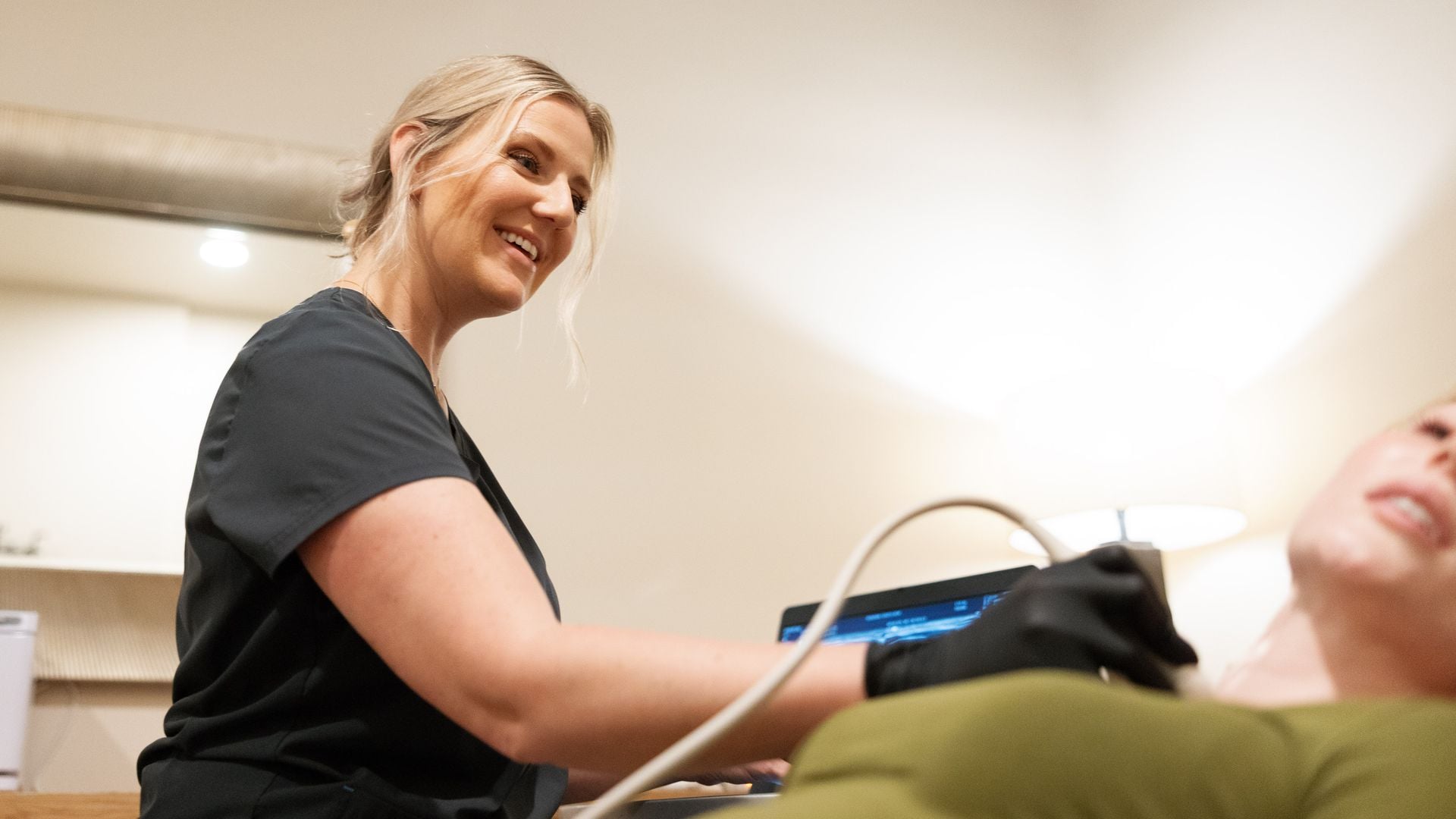
Follicle tracking, also called follicular monitoring, uses a series of transvaginal ultrasounds to watch the ovaries and lining through a cycle. It is used to time intercourse or intrauterine insemination (IUI), to monitor ovulation-induction medicines like letrozole or Clomid, and to check the lining before an embryo transfer. This guide explains the numbers you will hear: antral follicle count, follicle size, the trigger shot, and lining thickness.
The baseline scan and antral follicle count
Early in the cycle, usually on days 2 to 5, a baseline scan counts the small resting follicles (2 to 10 mm) in both ovaries. This antral follicle count (AFC) is one of the best measures of ovarian reserve, the supply of eggs remaining.
| Age | Typical average AFC (both ovaries) |
|---|---|
| 25 | About 14 |
| 30 | About 12 |
| 35 | About 10 |
| 40 | About 8 |
These are averages, and ranges are wide. A count below about 5 to 7 is generally considered low reserve, and a very high count is common with PCOS. AFC is usually interpreted together with the AMH blood test; neither predicts the chance of pregnancy on its own, but both guide how fertility medicines are dosed.
Watching a follicle grow
As the cycle progresses, one follicle usually becomes dominant and grows about 1 to 2 mm a day. Typical follicle sizes:
- Mature follicle: about 18 to 24 mm before ovulation in a natural cycle
- Trigger shot timing: often when the lead follicle reaches about 18 to 22 mm, depending on the clinic and medicine used
- With letrozole: follicles may ovulate at a slightly smaller size than with Clomid
- Ovulation usually happens about 36 hours after an hCG trigger, which is why IUI is timed the next day or so
Scans are typically every two to three days as the follicle approaches maturity, so a full monitored cycle often includes two to four ultrasounds.
Multiple follicles and safety
With ovulation-induction medicines, more than one follicle can grow. Counting mature follicles is one of the main safety jobs of monitoring, because several mature follicles raise the chance of twins or more. If too many develop, the doctor may cancel the trigger or advise against intercourse or IUI that cycle.
The lining in a natural or IUI cycle
The scan also measures the lining. Around ovulation it is usually 7 mm or more with a triple-line pattern. A thin lining can be a side effect of Clomid in some people, which is one reason letrozole is often preferred. For transfer cycles, see our guide to lining checks before embryo transfer.
Did I ovulate?
After ovulation, the follicle collapses and becomes a corpus luteum, which can look like a small cyst with a thick, vascular wall, sometimes with a little free fluid nearby. A progesterone blood test about a week after ovulation confirms it.
Ovarian hyperstimulation warning signs
Fertility medicines occasionally overstimulate the ovaries. Contact your fertility clinic urgently, or go to an emergency room, for rapid weight gain (more than 2 to 3 pounds a day), severe bloating or belly pain, nausea or vomiting, little urine, or shortness of breath.
How results reach your fertility clinic
Monitoring scans are only useful if the clinic gets the numbers in time to act. Before your cycle, confirm where results go and how quickly your clinic needs them. Agencies and IVF clinics can read our remote monitoring guide for how we coordinate.
Getting a pelvic ultrasound with us
At UltraVision Imaging, follicular monitoring and pelvic ultrasounds are performed by our registered sonographer and read by a board-certified radiologist, with the report ready within 24 hours and sent to you and, if you name one, your doctor. We see patients at our clinic, or we bring the scan to you in our California service areas. Pricing is a flat rate paid when you book, with no facility fee; HSA and FSA cards are accepted. Check availability on our booking page, and see what happens during a pelvic ultrasound and how to prepare. Please review your results with your doctor, who can put them in the context of your symptoms and history.
A sample monitored cycle
| Cycle day | What usually happens |
|---|---|
| Day 2 to 3 | Baseline ultrasound (antral follicle count, check for cysts) and sometimes bloodwork; start letrozole or Clomid if prescribed |
| Day 3 to 7 | Medication days |
| About day 10 to 12 | Follicle scan: measure the lead follicles and lining |
| Every 1 to 3 days after | Repeat scans until the lead follicle reaches trigger size |
| Trigger day | hCG trigger shot if used |
| About 24 to 36 hours later | IUI or timed intercourse |
| About 7 days after ovulation | Progesterone blood test to confirm ovulation, if ordered |
| About 14 days after ovulation | Pregnancy test |
Natural-cycle monitoring follows a similar pattern without medicines, and ovulation predictor kits may be used alongside scans.
How follicles are measured
Each follicle is measured in two or three directions and the average is reported, because follicles are rarely perfectly round. Reports usually list the lead follicles on each side, for example “right ovary: 19 and 14 mm; left ovary: 11 mm,” along with lining thickness and pattern. Small follicles under about 10 mm are often counted rather than individually measured. Consistent measurement technique matters when a decision depends on a millimeter or two, which is one reason clinics value working with the same monitoring team throughout a cycle.
Letrozole vs Clomid on ultrasound
- Letrozole usually produces one or two dominant follicles and tends to preserve lining thickness; it is often first choice in PCOS.
- Clomid (clomiphene) can produce more follicles and in some people thins the lining, which monitoring will reveal.
- Injectable gonadotropins produce more follicles and require closer monitoring because of higher twin and hyperstimulation risk.
Common questions during a monitored cycle
- “My follicle is 16 mm today. Is that too small?” Not necessarily; follicles grow about 1 to 2 mm a day, and your clinic will time the next scan accordingly.
- “I have two mature follicles.” That raises the chance of twins; your clinic will discuss whether to proceed.
- “There’s a cyst on my baseline scan.” Some clinics delay medication until it resolves; others proceed if hormone levels are normal.
- “Can I exercise?” Gentle activity is usually fine; avoid high-impact exercise if your ovaries are enlarged.
When follicle tracking suggests a change of plan
- No dominant follicle by the expected day: the dose may be increased next cycle, or the cycle extended with more scans.
- Too many mature follicles: the clinic may cancel the trigger to avoid a high-order multiple pregnancy.
- A thin lining with Clomid: switching to letrozole is a common adjustment.
- A persistent cyst from a previous cycle: starting medication may be delayed.
- Premature ovulation: a scan showing the follicle has already collapsed means timing is adjusted next cycle.
These adjustments are routine. Each cycle teaches the clinic more about how your ovaries respond.
Remote follicle tracking
Patients who live far from their fertility clinic often do follicle scans locally and send results to the clinic, which then calls with instructions for the trigger shot and IUI timing. This works well when the clinic’s order specifies exactly what to measure, the monitoring site reports follicle sizes and lining consistently, and results reach the nurse quickly. The IUI itself is usually done at the fertility clinic. Agencies and patients can read our guide to outside monitoring for how clinics and imaging partners coordinate.
Above all, follicle tracking is a partnership with your fertility team. The measurements guide their decisions, and your questions help you understand each step. Do not hesitate to ask what a number means for your cycle; good clinics welcome it.
Keep copies of each cycle’s scan results as well. Patterns across several cycles, such as how quickly your follicles grow and how your lining responds to each medicine, help your clinic fine-tune future treatment.
Frequently asked questions
What size follicle is mature?
Usually about 18 to 24 mm in a natural cycle. Trigger shots are often given when the lead follicle reaches about 18 to 22 mm, depending on the clinic.
What is a good antral follicle count?
Averages are about 14 at age 25, 12 at 30, 10 at 35 and 8 at 40, with wide ranges. A count below about 5 to 7 is considered low reserve.
How many scans are in a monitored cycle?
Usually a baseline scan plus two to four scans every two to three days as the follicle matures.
How thick should the lining be for IUI?
Usually 7 mm or more around ovulation, often with a triple-line pattern.
How can I tell if I ovulated?
A later scan may show a corpus luteum, and a progesterone blood test about a week after ovulation confirms it.
Getting a scan with us: our pelvic and women’s health ultrasound page explains what the scan covers and how to prepare. You can book online for our clinic, or we bring the scan to you at home. A board-certified radiologist reads every study, and the report is ready within 24 hours. Your own doctor interprets the results for you.
Sources
- Antral follicle (overview)
- Liu et al., Human Reproduction (2018): endometrial thickness and live birth
This article is general health information, not medical advice. It does not replace a conversation with your own physician or fertility specialist, who knows your history and can interpret results in context. If you have symptoms that worry you, contact your doctor; if you think you are having a medical emergency, call 911.