
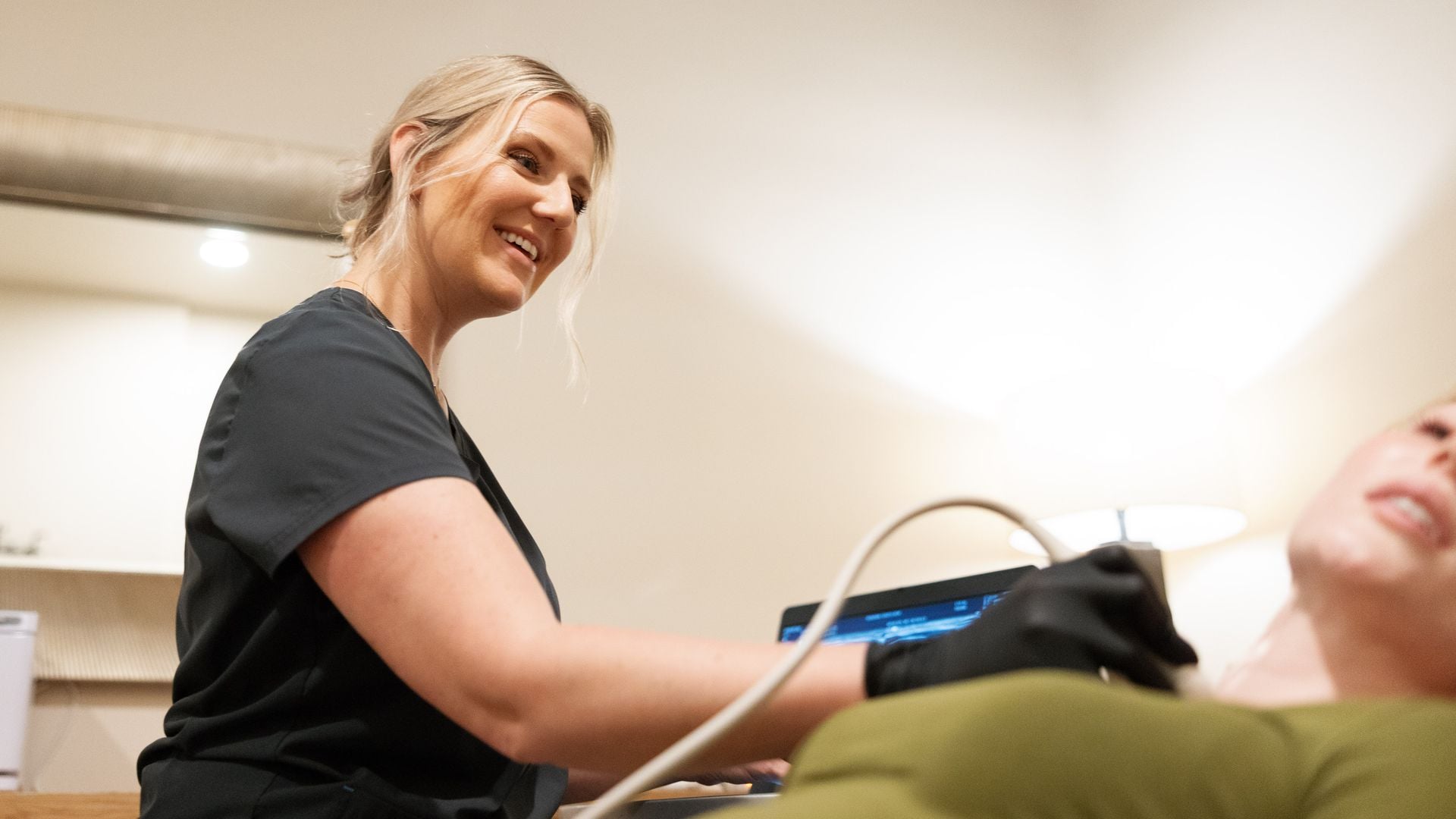
Periods that soak through protection, bleeding between periods, cycles that come every two weeks or disappear for months: abnormal uterine bleeding is one of the most common reasons women see a gynecologist, and a pelvic ultrasound is almost always one of the first tests. This guide explains what the scan looks for, when to time it, what it can and cannot find, and when bleeding needs urgent care.
What counts as abnormal bleeding
- Periods lasting more than about 7 to 8 days
- Bleeding heavy enough to soak a pad or tampon every 1 to 2 hours, or passing clots larger than a quarter
- Bleeding between periods or after sex
- Cycles shorter than about 24 days or longer than about 38 days, or that vary a lot month to month
- Any bleeding after menopause
- Heavy bleeding with tiredness or shortness of breath, which can mean anemia
PALM-COEIN: how doctors sort the causes
Gynecologists use a framework called PALM-COEIN. The first four letters are structural causes that imaging can often see; the rest are causes imaging usually cannot see.
| Letter | Cause | Can ultrasound show it? |
|---|---|---|
| P | Polyp | Often, especially with a saline-infusion sonogram |
| A | Adenomyosis | Often |
| L | Leiomyoma (fibroid) | Yes |
| M | Malignancy and hyperplasia | Can show a thick or irregular lining; diagnosis needs a biopsy |
| C | Coagulopathy (bleeding disorders) | No; blood tests |
| O | Ovulatory dysfunction (for example PCOS, thyroid problems) | Indirectly (ovaries, lining) |
| E | Endometrial causes | Usually no |
| I | Iatrogenic (medicines, IUDs, blood thinners) | Can show IUD position |
| N | Not yet classified | Varies |
What a pelvic ultrasound looks for
- Fibroids, especially ones touching or inside the cavity (fibroid guide)
- Adenomyosis (adenomyosis vs fibroids)
- Polyps and the thickness and texture of the lining (endometrial thickness guide)
- Ovaries, for cysts or polycystic morphology
- IUD position, if you have one (IUD check guide)
- Early pregnancy, if there is any chance of it
Timing the scan
Ultrasounds for bleeding are often best done shortly after a period ends, around days 5 to 10 of the cycle, when the lining is thinnest and polyps or small fibroids stand out. If your bleeding is constant or your cycles are unpredictable, your doctor will choose the best time. Bleeding on the day of the scan does not usually prevent it.
The saline-infusion sonogram (SIS)
If the regular scan suggests a polyp or the lining looks uneven, your gynecologist may recommend a saline-infusion sonogram, also called a sonohysterogram. A thin catheter places sterile saline into the uterus during a transvaginal ultrasound, gently separating the walls so polyps and submucosal fibroids can be seen clearly. It is usually done in a gynecologist’s office and takes about 15 minutes.
When the scan is normal
A normal ultrasound is useful information: it rules out many structural causes. Bleeding with a normal scan is often due to hormonal or ovulation problems, a bleeding disorder, medications, or thyroid issues, which are evaluated with blood tests. Persistent bleeding, especially over age 45 or with risk factors, may still need an endometrial biopsy.
Urgent and emergency bleeding
- Emergency (911 or ER): soaking a pad every hour for two or more hours, large clots with dizziness or fainting, or a racing heartbeat
- Same-day care: any bleeding when you might be pregnant, or bleeding with severe pain or fever
- Prompt appointment: any bleeding after menopause
Getting a pelvic ultrasound with us
At UltraVision Imaging, pelvic ultrasounds, with or without the transvaginal portion, are performed by our registered sonographer and read by a board-certified radiologist, with the report ready within 24 hours and sent to you and, if you name one, your doctor. We see patients at our clinic, or we bring the scan to you in our California service areas. Pricing is a flat rate paid when you book, with no facility fee; HSA and FSA cards are accepted. Check availability on our booking page, and see what happens during a pelvic ultrasound and how to prepare. Please review your results with your doctor, who can put them in the context of your symptoms and history.
Measuring how heavy “heavy” is
Heavy menstrual bleeding is officially defined by how much it affects your life, not by a lab number. Still, some signs suggest bleeding is heavier than average: needing to change a pad or tampon every hour or two, doubling up on protection, waking at night to change, passing clots larger than a quarter, flooding through clothes, or periods lasting more than a week. Period-tracking apps and a simple diary of how many products you use each day give your doctor a much clearer picture than “my periods are heavy.”
Iron deficiency: the hidden cost of heavy periods
Heavy periods are the most common cause of iron deficiency in women. Symptoms include tiredness, shortness of breath on exertion, dizziness, headaches, hair shedding, restless legs and cravings for ice. A blood count and ferritin test can check your iron stores. Treating the iron deficiency often makes people feel dramatically better while the cause of bleeding is addressed.
Bleeding patterns by life stage
| Life stage | Common causes |
|---|---|
| Teens | Immature ovulation in the first years of periods, bleeding disorders such as von Willebrand disease |
| 20s and 30s | Pregnancy complications, polyps, fibroids, PCOS, thyroid problems, contraception side effects |
| 40s | Fibroids, adenomyosis, polyps, perimenopausal ovulation changes, hyperplasia |
| After menopause | Thin, fragile lining, polyps, hormone therapy, hyperplasia and endometrial cancer, which must be ruled out |
Treatment options
- Non-hormonal medicines such as tranexamic acid, taken during the period, reduce blood loss; anti-inflammatory medicines also help.
- Hormonal options include a hormonal IUD, which is highly effective for heavy bleeding, birth control pills and progestins.
- Procedures include hysteroscopic removal of polyps or submucosal fibroids, endometrial ablation for those who are finished having children, fibroid embolization, and hysterectomy.
- Treating the underlying cause, such as thyroid disease or a bleeding disorder.
Your ultrasound helps decide which of these will work: for example, ablation is less effective with large fibroids or adenomyosis, and a polyp is best removed rather than treated with medicine.
Questions to ask your doctor
- What did the ultrasound show, and does it explain my bleeding?
- Do I need blood tests for iron, thyroid or bleeding disorders?
- Do I need a biopsy, saline sonogram or hysteroscopy?
- Which treatments fit my plans for pregnancy?
Bleeding with hormonal contraception
Irregular bleeding is a common side effect of hormonal contraception, especially in the first three to six months of pills, the implant, the shot or a hormonal IUD. It is usually harmless, but persistent bleeding, bleeding after sex, or a change in a previously stable pattern should be checked, because infections, polyps, pregnancy or a displaced IUD can also be the cause. A pelvic ultrasound, along with a pregnancy test and screening for infection, sorts these out.
Bleeding after sex
Bleeding after intercourse often comes from the cervix: a cervical ectropion, a cervical polyp or an infection. Because it can occasionally be a sign of cervical cancer, it should be reported, and you should be up to date with cervical screening. A pelvic ultrasound looks at the uterus and ovaries, but the cervix itself is best examined directly by your clinician.
Keeping track between visits
A simple bleeding diary helps: record each day of bleeding, how heavy it was, any clots, pain levels and how many products you used. Two or three months of records show patterns that one appointment cannot, and they make it much easier to judge whether a treatment is working.
Abnormal bleeding is common, usually treatable, and rarely something to simply live with. Starting with a clear history and a pelvic ultrasound puts you on the shortest path to the right treatment.
Frequently asked questions
What does a pelvic ultrasound show for heavy periods?
It looks for fibroids, adenomyosis, polyps, the lining thickness, ovarian cysts, IUD position and pregnancy.
When is the best time for an ultrasound for abnormal bleeding?
Often just after a period ends, around days 5 to 10, when the lining is thinnest. Your doctor may choose a different time if bleeding is continuous.
What is a saline sonogram?
A transvaginal ultrasound with sterile saline gently placed in the uterus to show polyps and fibroids in the cavity more clearly. It is usually done in a gynecologist’s office.
What if my ultrasound is normal but I still bleed?
Hormonal, ovulation, thyroid, medication or bleeding-disorder causes are evaluated with blood tests, and a biopsy may be needed in some cases.
When is heavy bleeding an emergency?
Soaking a pad every hour for two or more hours, or bleeding with dizziness, fainting or a racing heartbeat.
Getting a scan with us: our pelvic and women’s health ultrasound page explains what the scan covers and how to prepare. You can book online for our clinic, or we bring the scan to you at home. A board-certified radiologist reads every study, and the report is ready within 24 hours. Your own doctor interprets the results for you.
Sources
- AuntMinnie: uterine bleeding terms and transvaginal ultrasound
- Radiopaedia: endometrial thickness
- Healio: ACOG updates guidance for evaluating postmenopausal bleeding (2026)
This article is general health information, not medical advice. It does not replace a conversation with your own physician or fertility specialist, who knows your history and can interpret results in context. If you have symptoms that worry you, contact your doctor; if you think you are having a medical emergency, call 911.