
Choosing a mobile imaging provider is closer to choosing a consultant than a vendor. The provider will walk into your patients’ homes, represent your practice in front of them, and produce a document you will rely on for clinical decisions. Price and speed matter, but they are not the questions that protect your patients or your license.
Here are ten questions worth asking any mobile ultrasound provider before your first order, with notes on what a good answer sounds like.
1. Who performs the scan, and what credentials do they hold?
Ask whether every study is performed by a registered diagnostic medical sonographer, such as an ARDMS-credentialed sonographer with the specialty registries relevant to the exams you order: abdomen, OB/GYN, vascular. Ask how long they have been scanning and whether the same person will usually see your patients. Continuity matters to concierge patients.
2. Who reads the images?
A good answer names board-certified radiologists who interpret every diagnostic study and issue a signed written report. Be cautious of any arrangement in which the sonographer “reviews” images, or results are delivered as a technologist worksheet without a physician interpretation.
3. What protocol is used for each exam?
Ask whether studies follow published practice parameters, such as those from the AIUM and ACR, and whether limited and complete studies are clearly distinguished. A “quick look” that is billed or reported as a complete study is a red flag.
4. What does the equipment look like?
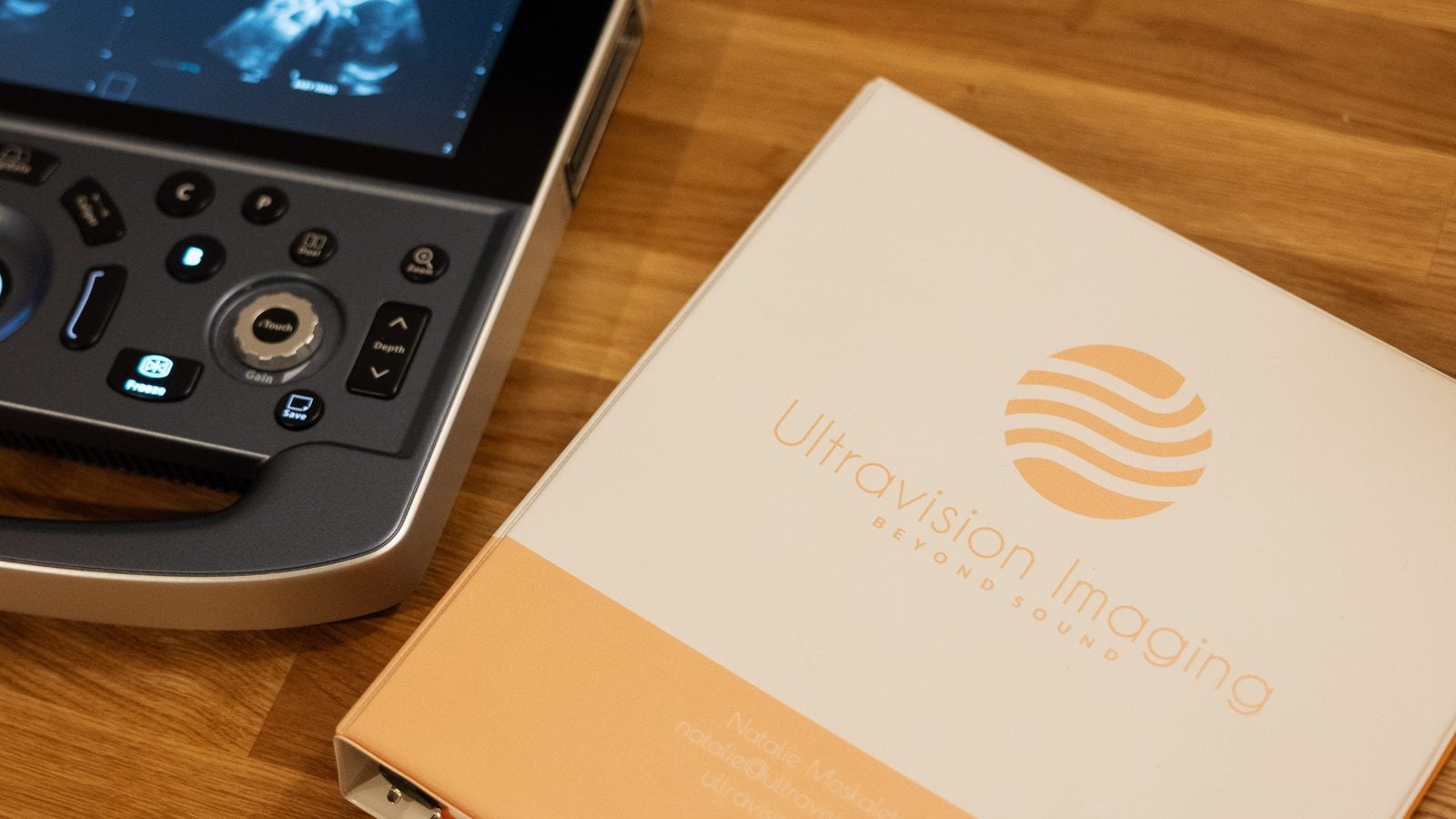
Portable systems range from handheld point-of-care devices to laptop-style diagnostic systems with full Doppler and multiple probes. For formal studies, the equipment should support the full protocol, including color and spectral Doppler for vascular work and the right probes for deep and superficial structures.
5. How fast is the visit, and how fast is the report?
Separate the two. Ask what Scheduled, Priority and STAT mean in practice, how the provider tells you whether it can reach a patient today, and when the written report typically arrives. Be wary of anyone who promises a signed radiologist report the same day for every study.
6. How are urgent findings communicated?
This is the question most practices forget. Ask who calls the ordering physician if the radiologist sees a finding that cannot wait for the written report, how quickly, and what happens if the physician cannot be reached. Professional guidance from the ACR addresses communication of urgent and unexpected findings; your provider should have a defined process.
7. Who talks to the patient?
Many concierge physicians want to be the only person who discusses results with the patient. Confirm that sonographers do not interpret or discuss findings, that reports go to the ordering physician, and that the provider will not market to your patients or contact them for anything beyond scheduling the study you ordered.
8. How is patient information protected?
Ask how orders are submitted, how reports are delivered and where images are stored. Orders and reports should move through secure channels, not ordinary email or text. Ask about staff policies on photography and social media, and how scheduling messages are worded.
9. Which areas are covered, and how are access issues handled?
Coverage maps tell you more than city names. Ask about travel to outlying areas, hotel and gated-community visits, and how the provider handles parking, building check-in and patients who are not home. If your members travel, ask whether the provider can serve them in other regions.
10. How does billing work?
Ask whether studies are invoiced to the practice or the patient, the payment terms, what happens with cancellations after dispatch, and whether additional fees apply for travel, waiting time or after-hours visits. Get it in writing. If you plan to pass costs through or include imaging in a membership, review the arrangement with your own advisors.
A short scorecard
- Registered sonographer for every study
- Board-certified radiologist report for every diagnostic study
- Published protocols; limited vs. complete clearly labeled
- Clear timing language for visit and report
- Defined urgent-finding communication
- Results only to the ordering physician
- Secure orders and reports
- Clear coverage and access process
- Written billing terms
Red flags when vetting a provider
- Results delivered by the sonographer, or a technologist worksheet presented as a report.
- Vague answers about who reads the images, or readers who are not board-certified radiologists.
- Promises that every study will have a signed report within hours.
- No written process for urgent findings.
- Reports sent by ordinary email or text message.
- Pricing that changes with the number of patients you refer, rather than a flat fee per study.
- Unwillingness to put payment and cancellation terms in writing.
Run a trial order
The best test of a provider is a real order. Choose a straightforward, non-urgent study, such as a scheduled thyroid or renal follow-up, and watch the whole process: how quickly the provider responds, how scheduling is handled with your office or the patient, whether the sonographer arrives in the promised window, how the patient describes the visit, and how long the report takes and how it reads. Ask the patient for honest feedback. One trial tells you more than any sales conversation.
Questions your patients will ask you
Patients tend to ask their physician the same few questions about a mobile study: Who is coming to my home? Is this the same test I would get at the hospital? Will they tell me the results? What do I need to do before? Having clear answers, and a one-page handout from the provider, keeps the experience consistent and reflects well on the practice.
Review the relationship over time
After the first few months, review the numbers that matter: average time from order to visit for each timing level, average time from visit to report, the share of studies that needed repeating, and any patient complaints. A good provider will welcome the review and share its own figures. Revisit the urgent-finding process at the same time, and confirm the contact numbers on file are still the right ones.
What to keep on file
Keep a short file for each imaging provider your practice uses: its written terms and rate card, its sonographers’ credentials, the radiology group it uses, its urgent-finding contact process, and any signed agreement. If a question ever arises about a study, that file answers it quickly.
Insurance and credentials on file
Ask whether the provider carries professional and general liability insurance appropriate for in-home work, and whether it will provide a certificate on request. Some practices, aftercare residences and buildings require one before a clinician can enter. Also ask how the provider verifies sonographer credentials and continuing education, and how often it reviews image quality with its radiologists.
Scaling with your practice
Finally, think about where your practice will be in a year. A provider that covers one city may not help when members travel or when you open a second location. Ask about coverage across the regions your members live in and visit, how STAT capacity changes as volume grows, and whether the provider can support a standing schedule for regular follow-ups.
Ask for a sample report
Request a de-identified sample report for the exams you order most. Check that it names the radiologist, lists the views and measurements obtained, uses standard reporting systems where they apply, such as TI-RADS for thyroid nodules, and states clear recommendations. A report you would be comfortable relying on is the best predictor of a provider you will be comfortable using.
How UltraVision answers
Every UltraVision study is performed by an ARDMS-registered sonographer and read by a board-certified radiologist, with the report going to the ordering physician, typically within 24 hours. Sonographers do not interpret or discuss findings with patients. Orders come through secure online forms, your practice receives one invoice, and STAT requests get a call right away telling you whether we can reach the patient today. We serve Los Angeles, San Diego County, Orange County and Palm Springs, the Bay Area and the Sacramento region; see every region on our page for physicians. Our team will be in touch to coordinate scheduling.
Frequently asked questions
What credentials should a mobile sonographer have?
Look for a registered diagnostic medical sonographer, such as ARDMS credentials, with specialty registries matching the exams you order.
Should a radiologist read every mobile study?
For diagnostic studies, yes. A board-certified radiologist’s signed report is the standard.
What is the most overlooked question?
How urgent findings are communicated to the ordering physician, and how fast.
Should the provider contact my patients directly?
Only to coordinate the study you ordered, if that is your preference. Results should go to you.
How should reports be delivered?
Through a secure channel to the ordering physician, not ordinary email or text.
What billing terms should be in writing?
Who is invoiced, payment terms, cancellation after dispatch, and any travel, waiting or after-hours fees.
Sources
- ARDMS: Credentials
- AIUM: Practice parameters
- ACR: Practice parameters and technical standards
- HHS: HIPAA for professionals
This article is general information for licensed clinicians and practice staff. It is not medical or legal advice and does not replace clinical judgment. UltraVision Imaging performs diagnostic ultrasound; a board-certified radiologist interprets every diagnostic study, and the ordering physician directs care.