
Hearing your baby’s heartbeat or finding out whether you are having a boy or a girl is a moment many families want to share. Elective ultrasound visits, often called keepsake, heartbeat or gender scans, exist for exactly that. They can be a lovely experience. They are also a different thing from the medical ultrasounds your OB or midwife orders, and it is worth understanding the difference before you book one anywhere.
In this guide we explain what an elective visit is and is not, what the U.S. Food and Drug Administration (FDA) and the American Institute of Ultrasound in Medicine (AIUM) say about non-medical ultrasound, how accurately the baby’s sex can be predicted at different weeks, and the situations in which you should book a diagnostic scan or call your doctor instead.
First: symptoms that need medical care, not a keepsake visit
An elective scan is never the right way to check on a worry. Call your OB or midwife, or go to the emergency department, if you have:
- Vaginal bleeding or cramping, especially in early pregnancy (see bleeding in early pregnancy).
- Pain on one side of the lower belly, shoulder-tip pain, dizziness or fainting in early pregnancy, which can be signs of an ectopic pregnancy. Call 911 for severe pain, heavy bleeding or fainting.
- Fluid leaking from the vagina, regular contractions before 37 weeks, a severe headache with vision changes, or fever.
- Later in pregnancy, a baby who is moving less than usual. Contact your OB or labor and delivery right away.
What an elective heartbeat and gender visit is
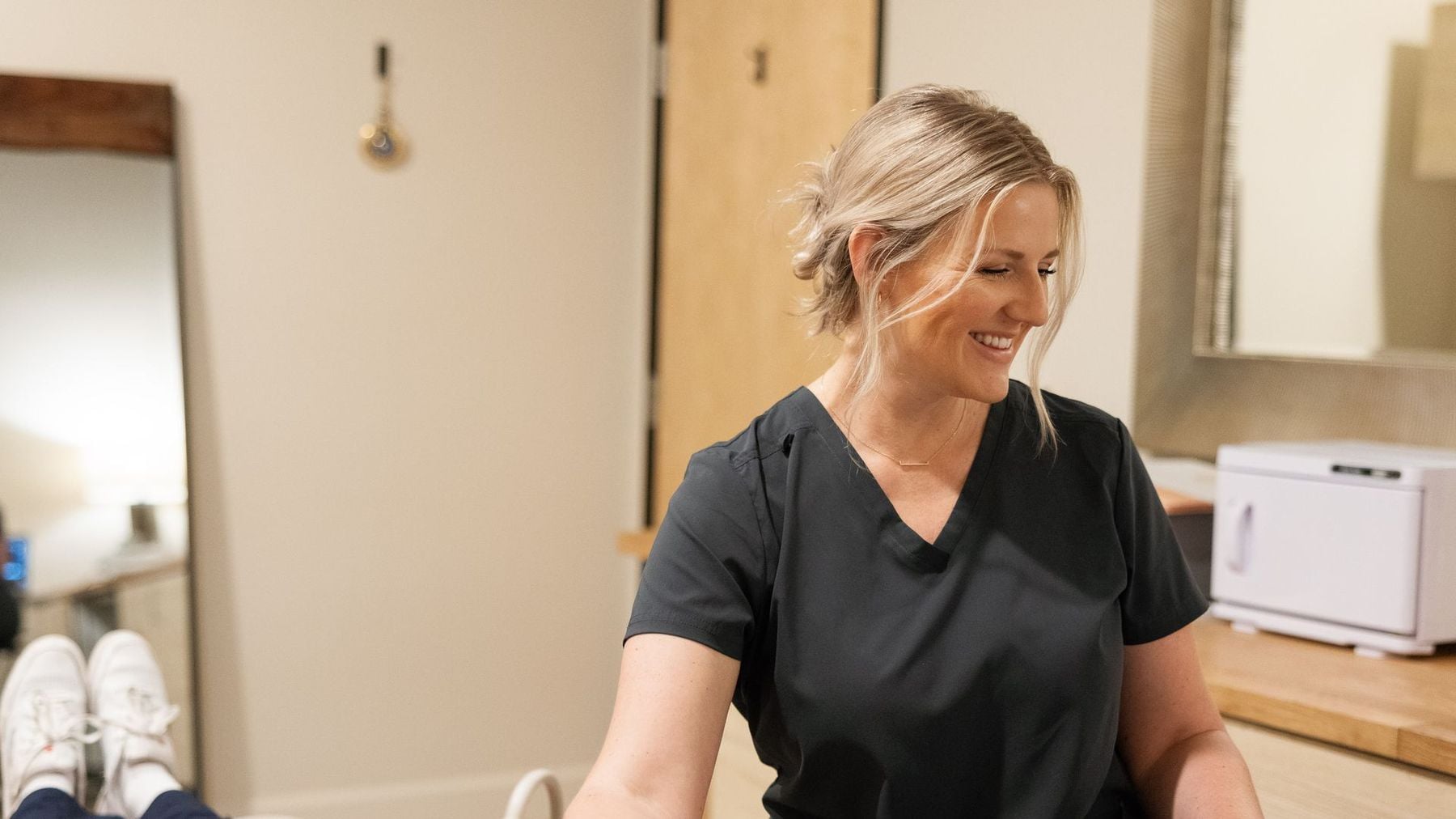
An elective visit is a relaxed, non-medical ultrasound session focused on the experience: seeing your baby on the screen, hearing the heartbeat and, when it can be seen, learning the baby’s sex. At UltraVision Imaging, our elective heartbeat and gender visit includes:
- Time to see your baby and hear the heartbeat with our ARDMS-certified sonographer.
- A look at the baby’s sex, when it can be seen.
- A heartbeat animal to take home, with your baby’s heartbeat recorded inside.
- No preparation needed.
What an elective visit is not
Just as important is what this kind of visit does not do:
- It is non-diagnostic. The sonographer is not performing a medical exam, taking the standard measurements or checking the baby’s anatomy.
- There is no radiologist report. No physician reviews the images, and nothing is sent to your OB.
- It does not replace any OB scan. Not the dating scan, not the anatomy scan, not a growth scan. Please stay under the care of your prenatal provider and keep every appointment they recommend.
- It is not a reassurance check. Because an elective visit is not designed to look for problems, not hearing about one does not mean everything has been checked.
| Elective heartbeat and gender visit | Diagnostic OB ultrasound | |
|---|---|---|
| Purpose | Bonding and sharing the moment | Answering a medical question |
| Measurements and anatomy review | No | Yes, to a standard protocol |
| Radiologist report | No | Yes; our reports are ready within 24 hours |
| Sent to your OB | No | Yes, if you name them |
| Replaces prenatal scans | No | Part of your prenatal care |
| Referral needed with us | No | No for first-trimester and growth scans; yes for the anatomy scan |
What the FDA and AIUM say about keepsake ultrasound
We think you should hear the professional position plainly, including the parts that are cautious about visits like ours.
The FDA
The FDA states that non-medical uses of ultrasound, such as making fetal keepsake videos, are discouraged. In the agency’s view, keepsake images are acceptable when they come from a medically indicated exam and need no extra exposure. Ultrasound is widely considered safe and there is no evidence of harm from diagnostic use, but the FDA notes that ultrasound energy can slightly heat tissue and, in some conditions, produce tiny bubbles (cavitation), and that long-term effects of repeated or prolonged exposure are not fully known. In a 2014 consumer update, the agency raised particular concern about sessions with no oversight of how long or how often scanning happened.
The FDA also says the ALARA principle, keeping exposure “As Low As Reasonably Achievable,” should be practiced, and that risks may increase when untrained users operate the equipment. It specifically warns that over-the-counter fetal heartbeat monitors should be used only by trained health care providers when medically necessary.
The AIUM
The AIUM’s 2020 statement on the prudent use and safety of diagnostic ultrasound in pregnancy strongly discourages the non-medical use of ultrasound and considers imaging without a medical indication inappropriate. It supports sharing images with parents during medically indicated exams, recommends a conservative approach to energy output, and says fetal ultrasound should be performed by appropriately trained and credentialed professionals. It opposes freestanding commercial keepsake studios.
What that means for you
Two things are true at once. Diagnostic ultrasound has an excellent safety record, and major professional bodies would still prefer that pregnancy scans be done for a medical reason. If you decide an elective visit is right for your family, these are reasonable things to look for anywhere you go:
- A credentialed sonographer, such as one certified by ARDMS, rather than an untrained operator.
- A visit focused on a few clear goals, not a long session.
- No pressure to book repeated visits.
- Clear language that the visit is non-diagnostic and does not replace prenatal care.
- No at-home heartbeat devices sold as a substitute for checking in with your provider.
How accurate is gender prediction, by week?
The baby’s sex can be estimated by blood test or by ultrasound, and the timing and accuracy differ a lot:
| Method | Typical timing | Accuracy notes |
|---|---|---|
| Cell-free DNA (NIPT) blood test | From about 10 weeks; ordered by your provider as part of prenatal screening | A large 2011 JAMA review found pooled sensitivity around 95% and specificity around 99% for maternal blood tests done after 7 weeks; tests done earlier were unreliable. Modern lab tests are generally very accurate for sex, but rare results can be wrong. |
| Ultrasound, late first trimester (about 11 to 14 weeks) | Based on the angle of the genital tubercle; mainly used in research or specialist settings | In one 2023 study, accuracy rose from about 88% at 11 to 12 weeks to about 99% at 13 to 14 weeks, but sex could only be assigned in about 78% of babies. |
| Ultrasound, second trimester (about 14 to 16 weeks onward) | The usual timing for elective gender visits | Accuracy improves week by week as the genitals develop and depends on the baby’s position, the cord and legs, and the scanning conditions. Earlier calls are less certain. |
| Mid-pregnancy anatomy scan (about 18 to 22 weeks) | Part of routine prenatal care | Accuracy is very high when the genitals are clearly seen; occasionally the view is not good enough to say. |
Two practical points. First, even at a good week, the sonographer can only call the sex when it can be clearly seen, so some visits end with “the baby wasn’t cooperating today.” Second, urine-based home gender tests are not reliable; a 2011 review found all the urine tests it studied to be unreliable. We do not draw blood; if you want cell-free DNA screening, ask your OB or midwife.
What to expect at an elective visit with us
- Before you come: no preparation is needed. Wear clothing that lets you uncover your belly easily.
- During the visit: you lie back comfortably while our sonographer moves the probe over your belly with warm gel. You will see your baby on the screen and hear the heartbeat.
- The gender reveal: if the sex can be seen, we will tell you. Let us know if you would rather keep it as a surprise for a reveal moment.
- Your keepsake: you take home a heartbeat animal with your baby’s heartbeat recorded inside.
- After the visit: there is no report. Keep your prenatal appointments as planned.
The baby’s heart rate in the second and third trimesters is normally in the range of about 110 to 160 beats per minute, and it naturally varies as the baby moves and rests. Hearing the heartbeat at an elective visit is not a medical assessment of the baby’s wellbeing.
When you need a diagnostic scan instead
Book a diagnostic study, or talk to your doctor, rather than an elective visit if:
- You have not had a first ultrasound yet, or you are unsure of your dates. Our first-trimester dating and viability scan (6 to 13 weeks) confirms the pregnancy, checks the heartbeat and dates the pregnancy, with a radiologist report. It needs a full bladder: drink 32 oz of water an hour before and do not empty your bladder.
- You conceived by IVF and need confirmation after transfer (see your first ultrasound after embryo transfer).
- You have had a previous loss and want a medical check (see no heartbeat at 6 weeks).
- Your OB wants a check on growth, fluid or position later in pregnancy. Our limited growth scan can be booked directly.
- It is time for your mid-pregnancy anatomy scan, which with us requires a referral from your OB or midwife.
- Anything feels wrong. Call your provider first.
Our pregnancy ultrasound timeline lays out which diagnostic scans happen when.
Booking an elective visit with us
You can book an elective heartbeat and gender visit directly, at our clinic or with our sonographer coming to your home in our California service areas. Ask us about timing for your week when you book. It is a flat rate paid when you book, with no facility fee. Because it is a keepsake visit with no medical report, please stay under the care of your prenatal provider. See times and book, or call (916) 751-1944 and we will help you decide whether an elective visit or a diagnostic scan fits what you need.
Getting a scan with us: our early pregnancy and OB ultrasound page explains what the scan covers and how to prepare. You can book online for our clinic, or we bring the scan to you at home. A board-certified radiologist reads every study, and the report is ready within 24 hours. Your own doctor interprets the results for you.
Sources
- U.S. Food and Drug Administration: Ultrasound Imaging
- AuntMinnie: FDA warns against keepsake fetal US, heartbeat monitors (2014)
- AIUM Official Statement: Prudent Use and Safety of Diagnostic Ultrasound in Pregnancy (2020)
- Archives of Gynecology and Obstetrics (2023): First-trimester identification of fetal sex by ultrasound
- ScienceDaily: Blood tests accurately predict fetal sex at 7 weeks; urine tests unreliable (summary of Devaney et al., JAMA 2011)
Frequently asked questions
Is an elective gender scan a medical ultrasound?
No. An elective heartbeat and gender visit is non-diagnostic. The sonographer does not take standard measurements or review the baby’s anatomy, no radiologist reads the images, and there is no report. It does not replace any scan your OB or midwife recommends.
How early can ultrasound tell the gender?
Elective gender visits are usually done from about 14 to 16 weeks onward, and accuracy improves with each week. Specialists can sometimes predict sex at 13 to 14 weeks, but less reliably and not in every baby. A cell-free DNA blood test ordered by your provider can identify sex from about 10 weeks.
Are keepsake ultrasounds safe?
Diagnostic ultrasound has an excellent safety record and no proven harm, but the FDA and AIUM discourage non-medical ultrasound and recommend keeping exposure as low as reasonably achievable, with scans done by trained, credentialed professionals. If you choose an elective visit, look for a credentialed sonographer and a focused session.
Will I get a report from an elective visit?
No. Elective visits produce no medical report and nothing is sent to your doctor. If you need a medical answer, book a diagnostic scan such as our first-trimester dating and viability scan or limited growth scan, which are read by a board-certified radiologist with a report ready within 24 hours.
Should I use a home fetal heartbeat monitor?
The FDA advises that fetal heartbeat monitors be used only by trained health care providers when medically necessary. A home device can give false reassurance. If you are worried about your baby, especially about reduced movement, contact your OB or labor and delivery right away.
Do I need a referral for an elective heartbeat and gender visit?
No. You can book it directly. It needs no preparation. Because it is a keepsake visit with no report, please continue your regular prenatal care.
This article is general health information, not medical advice. It does not replace a conversation with your own physician, who knows your history and can interpret results in context. If you have symptoms that worry you, contact your doctor; if you think you are having a medical emergency, call 911.